Dog Nutrition – Feeding by Life Stage, Activity & Individual Needs
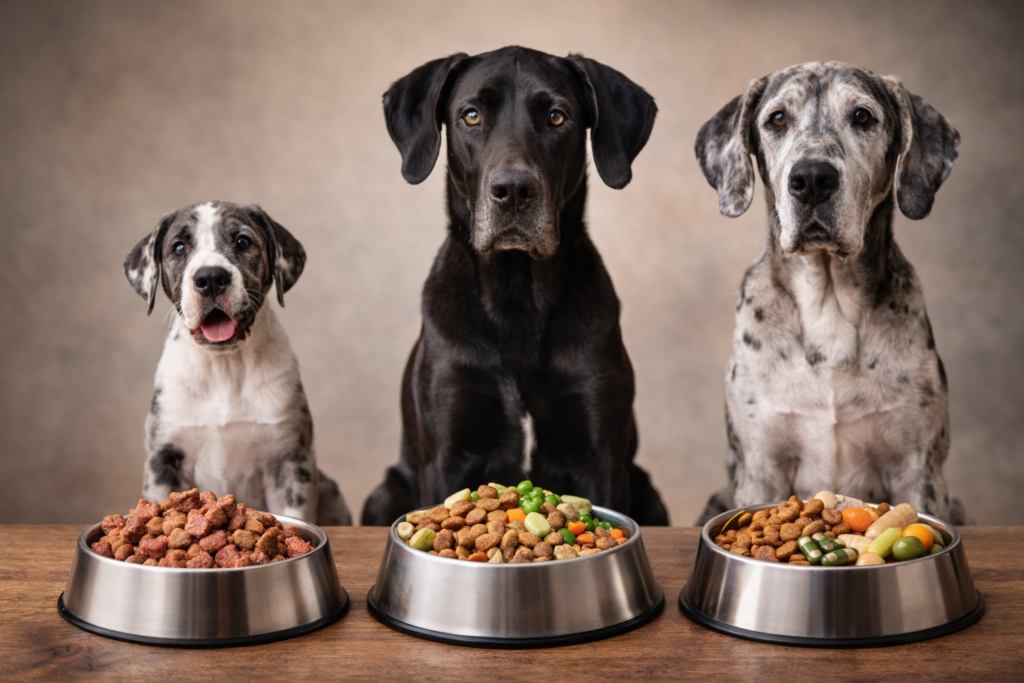
Dog nutrition is not static.
If you’ve ever watched a puppy sprint full speed across a field and then crash into a nap five minutes later, you already understand this instinctively. A puppy does not eat like an adult. An adult does not eat like a senior. And a relaxed companion dog definitely does not eat like a working dog.
Yet a lot of people feed the same food, in the same way, for years — assuming it “covers everything.”
Biology doesn’t work like that.
Dogs grow, develop, slow down, and change over time. Their metabolism shifts. Their muscles build and later decline. Their energy needs rise and fall depending on lifestyle. Proper nutrition isn’t about picking one “perfect” food — it’s about adjusting as your dog changes.
This guide is built to help you do exactly that: feed the dog in front of you, not the one printed on the bag.
The Foundation of Dog Nutrition
Nutrition isn’t just about filling a bowl and keeping your dog from being hungry. It affects almost every system in their body — from how they grow to how they age.
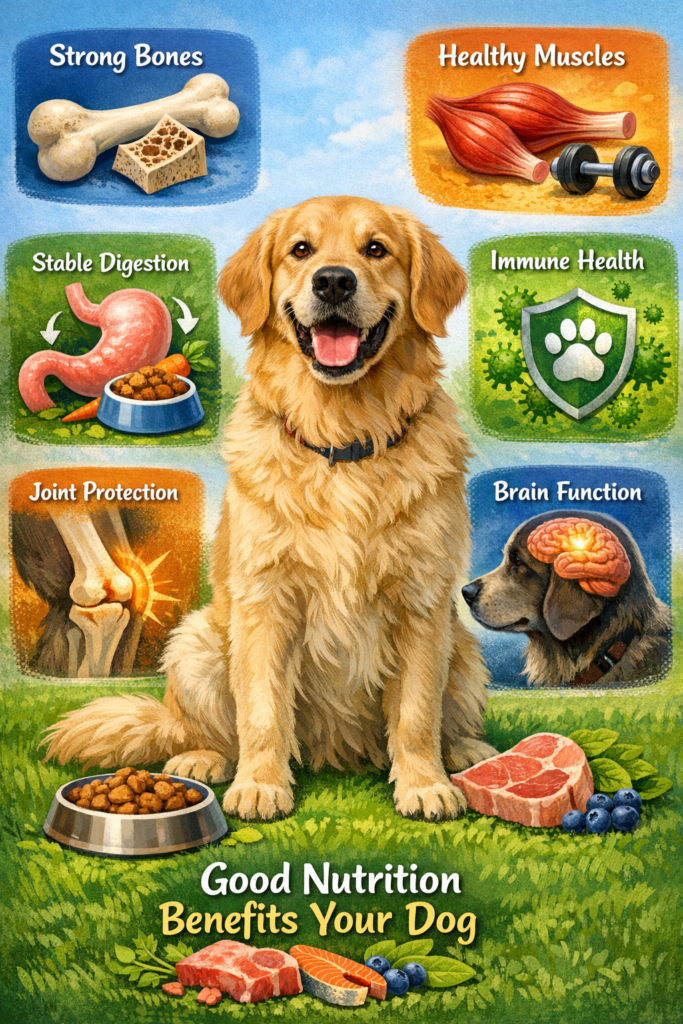
Good nutrition supports things like strong bones, stable digestion, healthy muscles, and consistent energy. It plays a role in immune health, joint protection, and even brain function, especially as dogs get older.
But here’s the part people often miss:
Nutrition is not just about calories. It’s about balance.
Too many calories without proper balance leads to weight gain. Too much calcium in a growing dog can affect how their skeleton develops. Too little protein in an older dog can speed up muscle loss.
So feeding well isn’t just about keeping a dog “full.” It’s about supporting how their body works — now and long-term.
Nutrition Changes with Life Stage
One of the biggest factors in how you should feed a dog is their age. What works for one stage of life can actually cause problems in another.
Puppy Nutrition – Building the Body
Puppies are developing everything at once — bones, muscles, organs, and their immune system. Because of that, their nutrition needs to be carefully controlled.
A common mistake is thinking faster growth is better. It’s not.
Especially in larger breeds, growing too quickly can put stress on developing joints and bones. That’s why balance matters more than speed.
Puppies need structured meals throughout the day, controlled portions, and the right balance of nutrients — not just “more food.”
Adult Nutrition – Finding Balance
Once a dog reaches adulthood, the goal shifts. Now it’s about maintaining a healthy body and matching food intake to actual activity.
This is where a lot of dogs start gaining weight — slowly, almost invisibly.
An hour-long hike and a short backyard walk are not the same thing, but many dogs are fed as if they are. Over time, that mismatch adds up.
Adult dogs need consistency. Not excess.

Senior Nutrition – Supporting Longevity
As dogs age, things change again. Their metabolism slows down, but their need for quality nutrition doesn’t disappear.
In fact, older dogs often need more support in specific areas — like maintaining muscle, protecting joints, and keeping digestion stable.
Weight control becomes more important, not less. And small changes in appetite or digestion should never be ignored.
Good nutrition at this stage is about preserving quality of life.
Nutrition Also Changes with Activity Level
Age is only part of the picture. How active a dog is plays just as big a role in how they should be fed.
A companion dog that mostly relaxes at home has very different needs than a dog that’s constantly training, working, or exercising.
Less active dogs are at higher risk of gradual weight gain. It happens slowly, which makes it easy to miss until it starts affecting movement and health.
More active dogs burn more energy, but that doesn’t mean unlimited feeding. They still need structure — just adjusted to match what they actually do.
Working dogs are in a category of their own. Their feeding needs to be intentional and performance-based, not just “more food in the bowl.”
Why “One Brand for Life” Can Be a Problem
Sticking to one food for years might feel simple — even responsible. But it can ignore some important realities.
Dogs change over time. Their needs shift with age, activity, and health. Even the food itself can change as formulas are updated.
So while consistency is helpful, blind loyalty to a single product can work against your dog if their needs are no longer being met.
A better approach is simple: stay loyal to your dog’s needs, not just the label on the bag.
How to Read a Dog Food Label (Without Overthinking It)
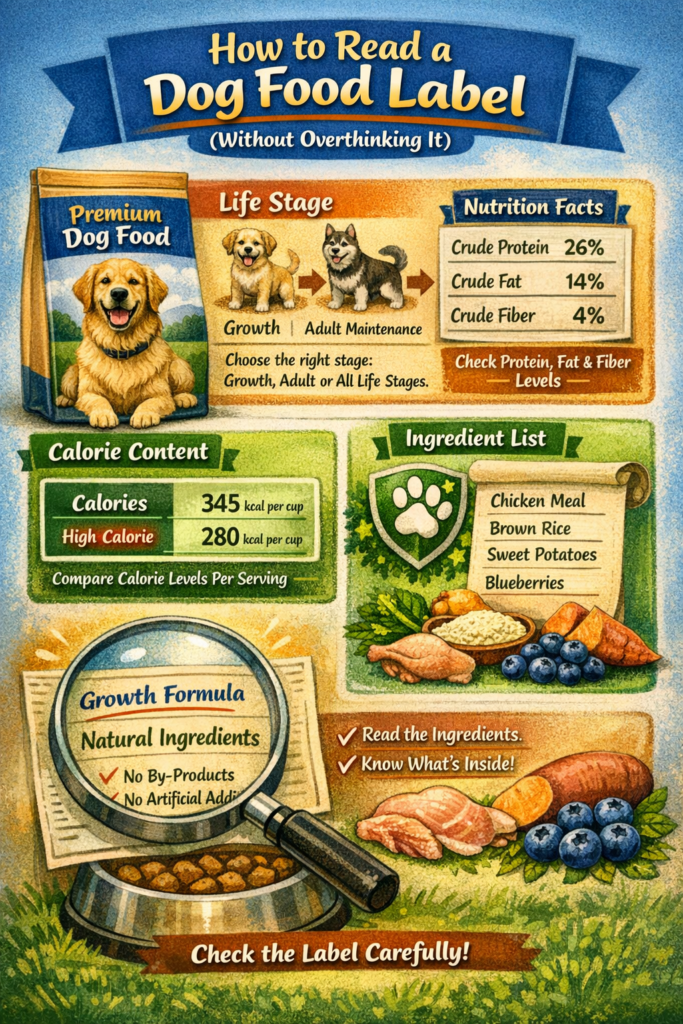
Dog food labels can look complicated, but once you know what to look for, they become much easier to understand.
Start with the life stage. Is the food designed for growth, maintenance, or all life stages? This matters more than most people realize. A food designed for growth may contain levels that are unnecessary — or even excessive — for adult or senior dogs.
Next, look at the basic nutritional breakdown. Protein, fat, fiber — these numbers matter, but they don’t tell the whole story on their own. Higher numbers don’t automatically mean better food.
Calorie density is one of the most overlooked details. Two foods can look similar but have very different calorie levels per serving. That difference can lead to gradual weight gain if you’re not paying attention.
Finally, take a realistic look at the ingredients. Ignore the marketing buzzwords and focus on whether the ingredients make sense and are clearly identified.
Common Nutrition Mistakes
Even well-meaning dog owners make mistakes when it comes to feeding.
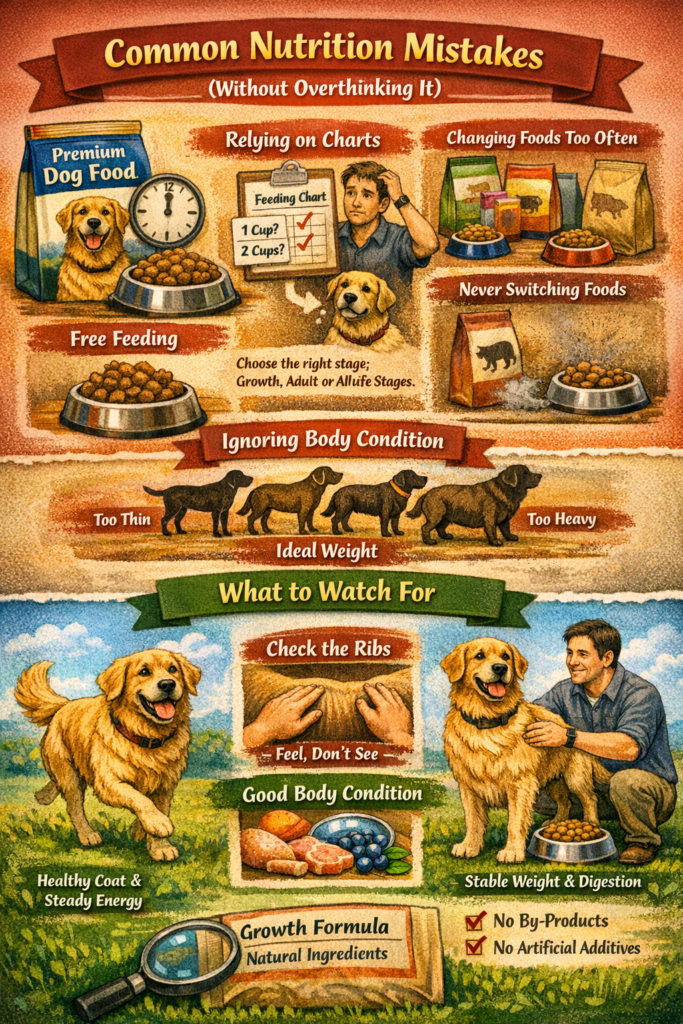
One of the most common is free feeding — leaving food out all day. It removes structure and makes it much harder to control intake.
Another is relying too heavily on feeding charts. These are starting points, not exact instructions. Every dog is different.
Some owners switch foods too often, while others never adjust at all. Both extremes can cause issues.
And one of the biggest mistakes? Judging food amounts based on habit instead of body condition.
Your dog’s body will always give you better feedback than a chart.
What to Watch For
You don’t need to be a vet to tell if your dog’s nutrition is working.
A healthy dog will have steady energy, a consistent appetite, and normal digestion. Their coat should look healthy, and their weight should stay stable over time.
You should be able to feel their ribs without them being visibly prominent. Their body should look defined, not rounded.
These small observations matter more than most people think.
The Role of Digestive Awareness (D.A.W.G.)
Nutrition and digestion go hand in hand.
Even the highest-quality food won’t help if your dog isn’t digesting it properly. Things like soft stool, gas, or inconsistent appetite are not just minor issues — they’re signals.
This is where the D.A.W.G. system (Digestive Awareness & Wellness Guide) becomes important. It helps you pay attention to what your dog’s body is telling you, not just what you’re feeding them.
Because feeding well only works when digestion is stable.
DAWG coming soon
When to Ask for Help
Sometimes, adjusting food on your own isn’t enough — and that’s okay.
If a dog has ongoing digestive issues, sudden weight changes, or signs of food intolerance, it’s time to involve a professional.
Getting guidance early can prevent small problems from becoming bigger ones.
Best Dog Food for Large Breeds: What to Know
“There are countless choices on the shelves, all claiming to be the best. Before you start shopping, there are a few things you need to know about large dog nutrition to help you choose the best food for your dog from puppyhood to their golden years.”
Feed the Dog in Front of You
Your dog is an individual.
They are not a feeding chart. They are not a brand. And they are definitely not identical to any other dog — even within the same breed.
Good nutrition comes down to observation and adjustment. Watching how your dog responds. Making changes when needed. Staying aware of how age, activity, and health affect their needs.
Feeding well isn’t about trends or perfect formulas.
It’s about paying attention — and responding to what your dog is telling you.
