Why digestion varies — and how proper feeding prevents lifelong problems
Digestive health in giant breed dogs is not one‑size‑fits‑all — and much of that comes down to breed‑specific digestive traits. Some dogs can eat almost anything without issue, while others develop loose stools, gas, or discomfort from even minor dietary changes. These differences aren’t random. They’re shaped by genetics, growth rate, body structure, feeding habits, and long‑term nutritional balance.
Understanding how your individual dog’s digestive system works is one of the most important parts of protecting their health. When owners recognize the digestive traits common in giant breeds, it becomes easier to prevent problems before they start. And it all begins with feeding correctly for their size, age, and activity level.
This is exactly why we developed the Feeding System — to help owners match nutrition to the dog in front of them, rather than relying on marketing claims on the bag. When feeding aligns with a dog’s natural digestive traits, everything from stool quality to long‑term joint health improves.
Why Giant Breed Digestion Is Different
Giant breeds face digestive challenges that smaller dogs simply do not. Their larger body size, deeper chest structure, and slower developmental timeline all influence how food is processed and tolerated.
Several factors make proper feeding especially important:
• Larger stomach volume and slower emptying
• Greater stress on metabolic and digestive regulation
• Increased risk of gas accumulation and gastric torsion (bloat)
• Longer growth period requiring carefully balanced nutrition
• Greater sensitivity to overfeeding and rapid diet changes
Even within giant breeds, digestive tolerance varies significantly.
Some breeds, such as Great Danes and Irish Wolfhounds, tend to have highly sensitive digestive systems. Others, including Mastiffs and Anatolian Shepherds, often tolerate a wider range of foods — but can still develop serious problems if fed improperly over time.
No giant breed is immune to digestive consequences from poor nutritional balance.
Common Signs of Digestive Stress
Digestive issues often develop gradually. Early signs are easy to overlook but important to recognize. Watch for:
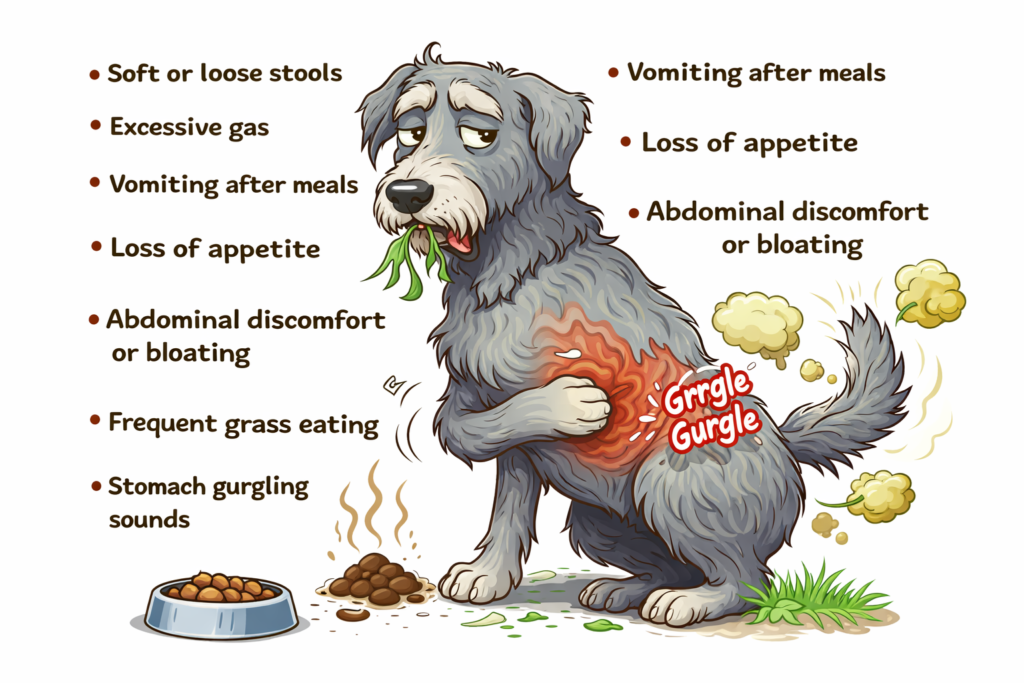
These symptoms do not always mean the food is “bad.” Often, they indicate a mismatch between the food and the dog’s digestive capacity, feeding schedule, or nutritional balance.
The Hidden Cause: Feeding Mismatches Over Time
Most digestive problems in giant breeds usually don’t start with one big mistake. Instead, they tend to develop slowly from small mismatches in diet and feeding habits that repeat over time—sometimes for months or even years.
For example, a dog may be eating food that is simply too rich for its daily activity level. In other cases, excess calories can put strain on the dog’s metabolism and digestive system. Frequent switching between food formulas can also upset digestion, especially in sensitive breeds. Overfeeding is another common issue, where a dog receives more food than its body actually needs. Even feeding schedules can play a role if large meals overload the digestive system.
Because of this, consistency and balance usually matter far more than constantly chasing the newest dog food formula or brand.
The Feeding System was created to help dog owners avoid these long-term nutritional mismatches. Instead of guessing, it helps match a dog’s specific needs to the right nutritional range by considering things like:
- Age
- Activity level
- Metabolic demand
- Digestive tolerance
When these factors are aligned with the right feeding approach, many common digestive issues in large and giant breeds can often be reduced or prevented.
Feeding Habits That Improve Digestive Stability
Proper feeding structure protects digestion as much as food selection itself. Giant breeds benefit from:
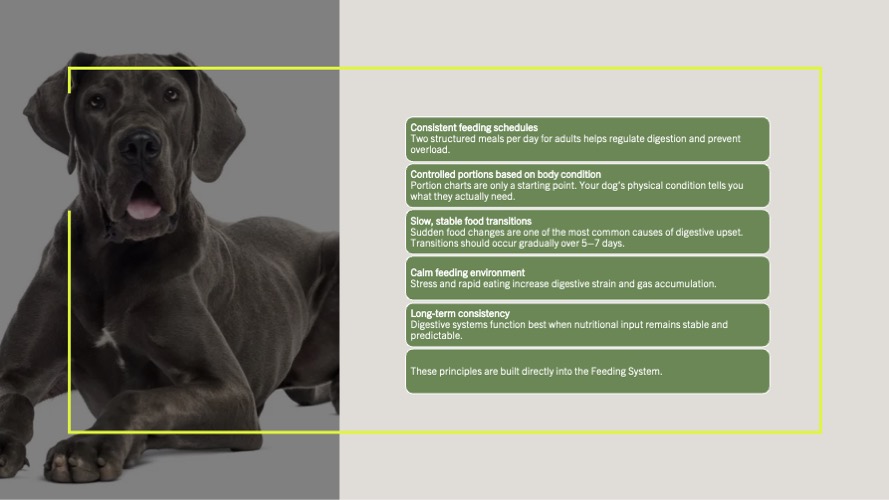
Consistent feeding schedules
Two structured meals per day for adults helps regulate digestion and prevent overload.
Controlled portions based on body condition
Portion charts are only a starting point. Your dog’s physical condition tells you what they actually need.
Slow, stable food transitions
Sudden food changes are one of the most common causes of digestive upset. Transitions should occur gradually over 5–7 days.
Calm feeding environment
Stress and rapid eating increase digestive strain and gas accumulation.
Long-term consistency
Digestive systems function best when nutritional input remains stable and predictable.
These principles are built directly into the Feeding System.

Breed Tendencies: Sensitive vs. Resilient Digestive Systems
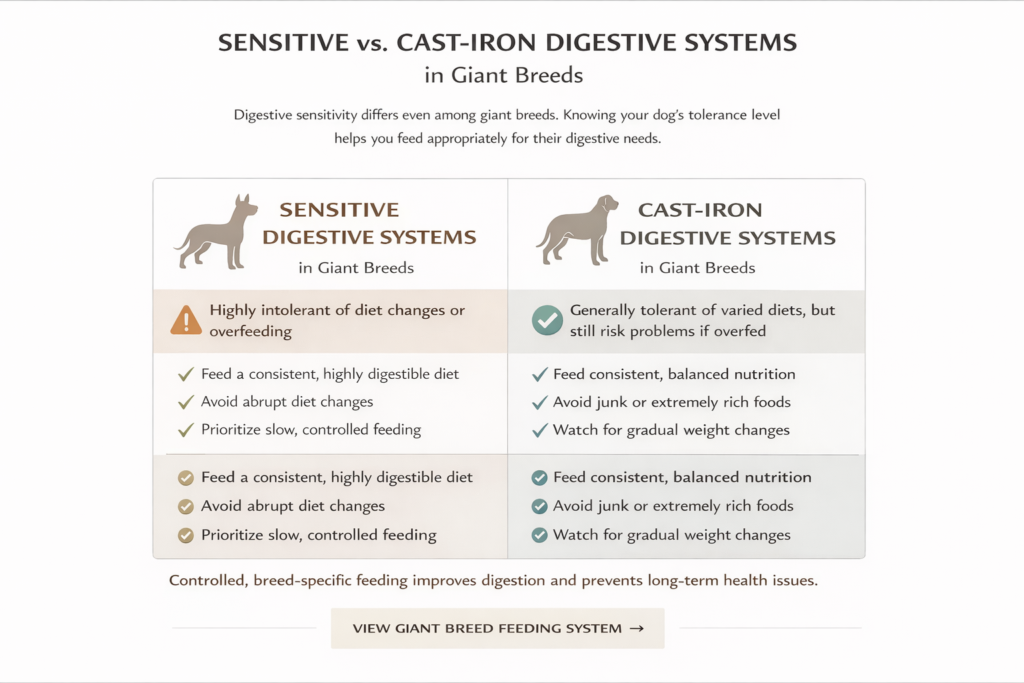
Some breeds are naturally more sensitive than others.
Breeds commonly prone to sensitive digestion include:
• Great Danes
• Irish Wolfhounds
• Saint Bernards
• Newfoundlands
Breeds that often tolerate a wider range of foods include:
• Mastiffs
• Leonbergers
• Anatolian Shepherds
However, even dogs with naturally strong digestion can develop problems if feeding does not match their metabolic needs.
Digestive strength does not eliminate the need for proper nutritional balance.
The Most Important Factor: Long-Term Nutritional Stability
Digestive health is not built in a single day.
It develops over years of consistent, appropriate feeding.
Dogs thrive when nutrition supports:
• Stable metabolism
• Lean body condition
• Appropriate protein and fat levels
• Digestive consistency
• Predictable feeding routines
Dogs struggle when nutrition fluctuates constantly.
This is why the Feeding System focuses on structure — not brands.
Because structure protects digestion.
When to Contact Your Veterinarian
Digestive upset is common occasionally, but certain symptoms require immediate medical attention.
Contact your veterinarian immediately if your dog experiences:
• Repeated vomiting
• Blood in stool
• Swollen or hard abdomen
• Refusal to eat or drink
• Sudden lethargy
• Signs of bloat (emergency)

How the Feeding System Protects Digestive Health
Most dog owners choose food based on a few simple things:
- Price
- The breed size printed on the bag
- The life stage label (puppy, adult, senior)
Those labels can be helpful, but they don’t always tell you whether the nutrition truly fits your specific dog. Two dogs of the same breed and age can have very different activity levels, metabolism, and digestive tolerance.
That’s where the Feeding System comes in.
Instead of guessing, the Feeding System helps owners look at the bigger picture. It guides you toward the right nutritional fit by helping you identify:
- Proper nutritional ranges
- The right feeding frequency
- A balanced calorie intake
- A stable feeding routine
- Digestive-friendly feeding habits
In simple terms, it removes much of the guesswork from feeding.
And when the guesswork disappears, digestive problems often become much easier to prevent.
The Goal Is Stability, Not Complexity
Healthy digestion in giant breeds doesn’t come from constantly changing foods or trying every new formula on the market.
In most cases, good digestive health comes from something much simpler:
- Consistency
- Balance
- Structure
- Observation
When feeding habits match your dog’s real needs, things tend to settle into place. Digestion becomes more stable, energy levels improve, and maintaining long-term health becomes much easier for both the dog and the owner.
Learn Your Dog’s Proper Feeding Profile
Your dog’s digestive health begins with proper feeding structure.
Quick Reference: Signs Your Dog’s Food Is Working
Healthy stool consistency
Stool quality is one of the clearest indicators of digestive health. Firm, well-formed stool shows that nutrients are being properly digested and absorbed. Occasional variation is normal, but consistent, stable stool is a strong sign that the feeding structure matches your dog’s digestive capacity.
Stable body condition
A healthy giant breed dog should maintain a lean, athletic appearance without gradual weight gain or loss. You should be able to feel the ribs without excessive fat covering, but they should not appear overly thin. Stable condition means calorie intake and metabolic needs are properly aligned.
Consistent appetite
Dogs that are receiving appropriate nutrition typically eat with steady, predictable interest. Sudden loss of appetite or inconsistent eating patterns can indicate digestive discomfort, metabolic stress, or nutritional imbalance.
Calm digestion after meals
After eating, your dog should appear comfortable and relaxed. Excessive gas, restlessness, or visible discomfort after meals often indicates that the digestive system is under strain from improper feeding volume, speed, or nutritional composition.
Steady energy levels
Balanced nutrition supports stable, reliable energy. Your dog should be alert, engaged, and capable of normal daily activity without signs of fatigue, sluggishness, or hyperactive spikes followed by crashes.
If these remain stable, your feeding structure is working.
Digestive health is built on consistency over time. When these indicators remain steady, it confirms that your dog’s nutritional intake is properly supporting their body.
Quick Reference: Warning Signs of Feeding Mismatch
Frequent loose stool
Persistent soft stool often indicates that the digestive system is struggling to process the current feeding structure. This may result from excessive calorie intake, poor nutrient balance, or sudden food changes.
Gas or bloating
Excess gas is a sign of digestive inefficiency. In giant breeds, this can also increase the risk of serious conditions such as gastric dilatation. Frequent bloating should never be ignored.
Weight gain or loss
Unintended weight changes signal a mismatch between calorie intake and metabolic needs. Even gradual weight gain places additional strain on joints, while weight loss may indicate insufficient nutritional support.
Low energy
Poor nutrition often results in reduced stamina, increased fatigue, or lack of engagement. Energy levels reflect how effectively the body is converting food into usable fuel.
Inconsistent appetite
Dogs experiencing digestive discomfort may become hesitant to eat or show fluctuating interest in food. This inconsistency often reflects internal digestive stress rather than behavioral preference.
These are often early signs nutrition needs adjustment.
Addressing these warning signs early helps prevent more serious long-term health consequences and restores digestive stability.
