

Nutrition-Rich Food for Dogs – Beyond Marketing Claims
The Word “Rich” Is Everywhere
Walk down any pet food aisle and you’ll see it everywhere: “rich in protein,” “rich flavour,” “rich ingredients.” The word rich sounds impressive. It feels premium, almost luxurious—like you’re giving your dog something special.
But here’s where things get confusing.
When it comes to dog food, “nutrition-rich” doesn’t mean heavy, indulgent, or packed with extra calories. It means something much more important: the food is dense in useful nutrients, biologically appropriate, and efficiently used by your dog’s body.
That difference matters more than most people realise. Understanding it is one of the simplest ways to protect your dog’s long-term health.
What Does “Nutrition-Rich” Actually Mean?
Let’s simplify it.
A nutrition-rich food is one that delivers a high concentration of essential nutrients compared to the number of calories it contains. In other words, your dog gets more real value out of every bite.
What it doesn’t mean is:
- Extra fat just to improve taste
- Added sugars
- Heavy flavour coatings
- Excess calories
- Fancy packaging
A lot of foods look premium on the outside but are diluted on the inside.
Here’s the key idea to remember:
- Nutrition-rich is not the same as calorie-dense
- It’s not the same as luxury or gourmet
- It’s not about marketing claims
Nutrition-rich simply means the food provides meaningful biological value.
Marketing focuses on flavour and appeal.
Biology focuses on function and results.
The Difference Between “Nutrition” and “Nutrition-Rich”
This is a small distinction, but it has a big impact over time.
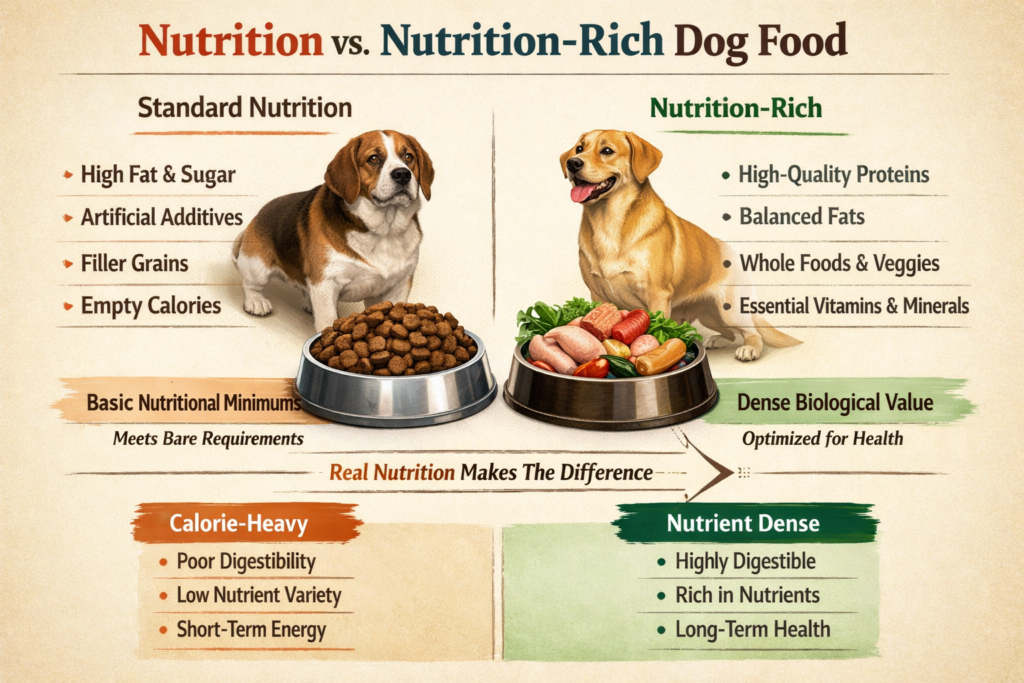
At a basic level, nutrition just means a food meets minimum requirements. It supports growth, maintenance, and general health. This is the foundation—it keeps a dog alive and functioning.
But meeting minimum standards doesn’t automatically make a food high quality.
That’s where nutrition-rich comes in.
Nutrition-rich food goes a step further. It looks at whether nutrients are actually usable by the body. It asks questions like:
- Is the protein easy to digest and absorb?
- Are the fats balanced and appropriate?
- Are the carbohydrates useful or just filler?
- Are vitamins and minerals naturally present and balanced?
A food can technically meet all nutritional guidelines and still be low quality over the long term.
This is exactly why we built the Feeding System—to help you move beyond minimum standards and start thinking in terms of quality over time, not just adequacy.
What Makes a Dog Food Nutrition-Rich?
Now let’s make this practical.
Protein quality is one of the first things to look at. Foods that use clearly named animal proteins like chicken, beef, or lamb tend to provide better biological value. What matters most isn’t just the percentage on the label, but how much of that protein your dog can actually use.
Fat quality is just as important. Dogs need fat, but it has to be balanced. Good foods include appropriate levels of Omega-3 and Omega-6 fatty acids and avoid turning fat into a shortcut for boosting calories.
Carbohydrates aren’t the enemy, but they do need to be chosen carefully. Whole, digestible sources with useful fiber support gut health, while cheap fillers simply bulk up the food without adding real value.
Then there are micronutrients—vitamins and minerals. These are often overlooked, but they’re essential for long-term health. Ideally, they come naturally from whole ingredients, not just from heavy synthetic fortification.
When all of these work together, you get a food that supports the body efficiently instead of just feeding it.
Nutrition-Rich vs. Calorie-Dense
This is where a lot of people get misled.
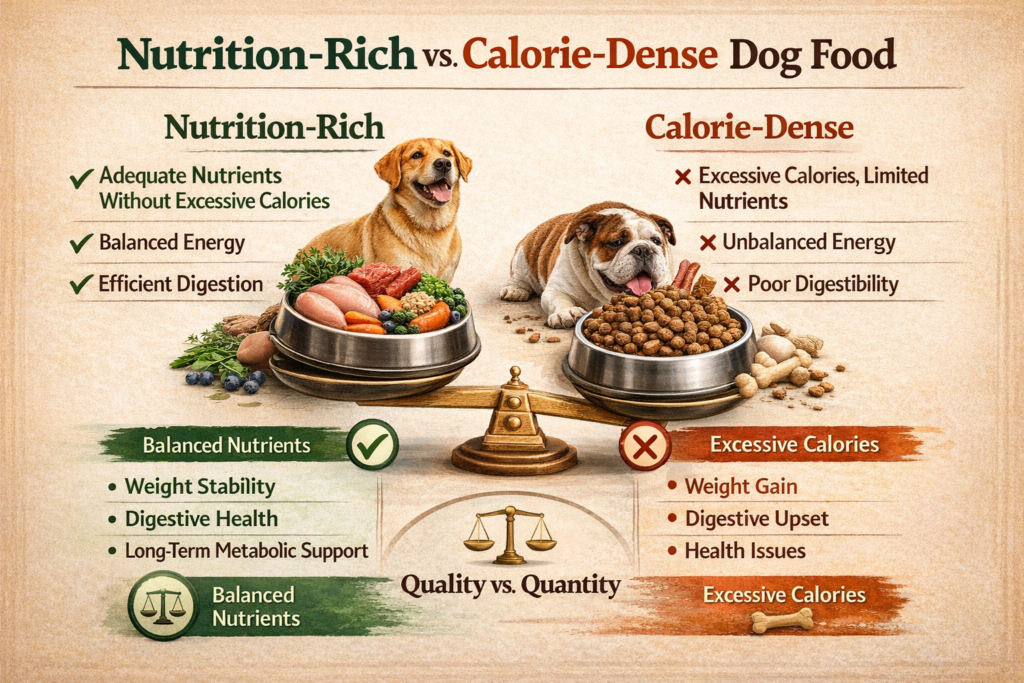
A food can be very high in calories but still low in useful nutrition. For example, something high in fat but low in micronutrients and fibre may provide energy, but not balanced support.
Nutrition-rich food works differently. It delivers:
- Balanced energy
- Strong nutrient support
- Efficient digestion
This directly affects things like weight stability, digestion, and long-term metabolic health.
It also connects closely with the D.A.W.G. system (Digestive Assessment & Wellness Guide) that we’re developing. That system focuses on what your dog’s body is actually telling you—because digestion is where nutrition either succeeds or fails.
DAWG coming soon
Feeding Styles – Can They Be Nutrition-Rich?
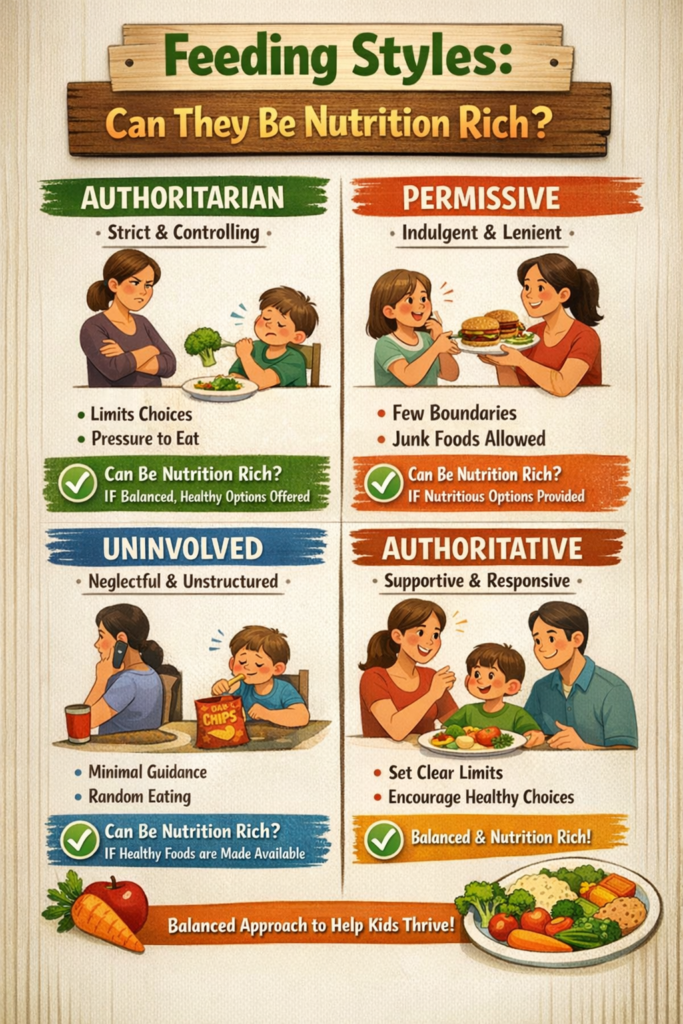
This isn’t about saying one feeding style is “right” and another is “wrong.” It’s about understanding how each one performs.
Dry food (kibble) can be nutrition-rich if it’s well formulated, but quality varies a lot depending on ingredients and processing.
Raw diets can offer excellent nutrient availability, but they come with a real risk of imbalance if not carefully planned.
Fresh or gently cooked diets often look appealing and transparent, but they still need proper formulation to avoid gaps.
Plant-based diets are possible, but they require precise balancing and close monitoring, especially when it comes to amino acids and long-term health.
The key point is simple: no feeding style is automatically nutrition rich. It depends on how well it’s built.
That’s why the Feeding System exists—to help you evaluate these choices instead of guessing.
The Danger of “Rich-Tasting” Food
One of the biggest misunderstandings comes from confusing rich taste with rich nutrition.
Foods that rely on heavy gravies, sugar coatings, or artificial flavor enhancers may taste great to a dog, but that doesn’t mean they’re providing real nutritional value.
Dogs don’t need indulgent, dessert-like foods.
They need consistent biological support.
And this is where marketing can be misleading—because flavour sells, even when it doesn’t support health.
Life Stage and Activity Still Matter
A growing puppy, an adult dog, and a senior dog all require different nutrient balances. The same goes for activity levels—companion dogs, active dogs, and working dogs all use energy differently.
Nutrition-rich feeding isn’t just about ingredients. It’s about alignment:
- Age
- Activity level
- Body structure
- Health status
This is a core principle of the Feeding System and something the upcoming D.A.W.G. system will help track through real-world observation.
Signs a Food Is Truly Nutrition-Rich
You don’t need a lab test to see if a food is working.
Your dog will show you.
A nutrition-rich diet usually results in:
- A lean, healthy body condition
- Stable energy levels
- Firm, consistent stool
- A healthy coat
- Strong muscle tone
- No ongoing digestive issues
If those things are in place, you’re probably on the right track.
If not, it’s worth reviewing digestion more closely—which is exactly what the D.A.W.G. system is designed to help with.
When to Get Professional Help
Some situations need expert guidance.
This is especially true if you’re feeding raw or plant-based diets, raising large or giant breed puppies, dealing with medical conditions, or seeing unexplained weight or digestive changes.
Getting advice from a veterinarian or a qualified nutrition expert isn’t overreacting—it’s being proactive.
Small adjustments early can prevent bigger problems later.

Quality Over Trend
Nutrition-rich feeding isn’t about trends, branding, or what sounds impressive.
It comes down to four things:
- Biological suitability
- Digestive efficiency
- Life stage alignment
- Activity compatibility
The goal isn’t to feed in a way that looks impressive.
The goal is to feed in a way that actually works.
The Feeding System gives you the structure to make those decisions.
The upcoming D.A.W.G. system will help you monitor how well those decisions are working in real time.
Together, they create something most pet owners never get:
A clear, practical way to feed based on biology—not marketing.
Feed with intention.
Watch your dog.
Adjust when needed.
That’s what nutrition-rich really means.
