Obesity in Giant Breed Dogs: When Extra Weight Becomes a Heavy Burden
There is something almost comforting about a big dog that looks “solid.” A broad chest, thick shoulders, heavy paws planted like tree stumps in the yard — giant breeds are supposed to look powerful. But sometimes that extra “bulk” is not muscle or healthy structure. Sometimes it is obesity quietly building pressure inside the body day after day.
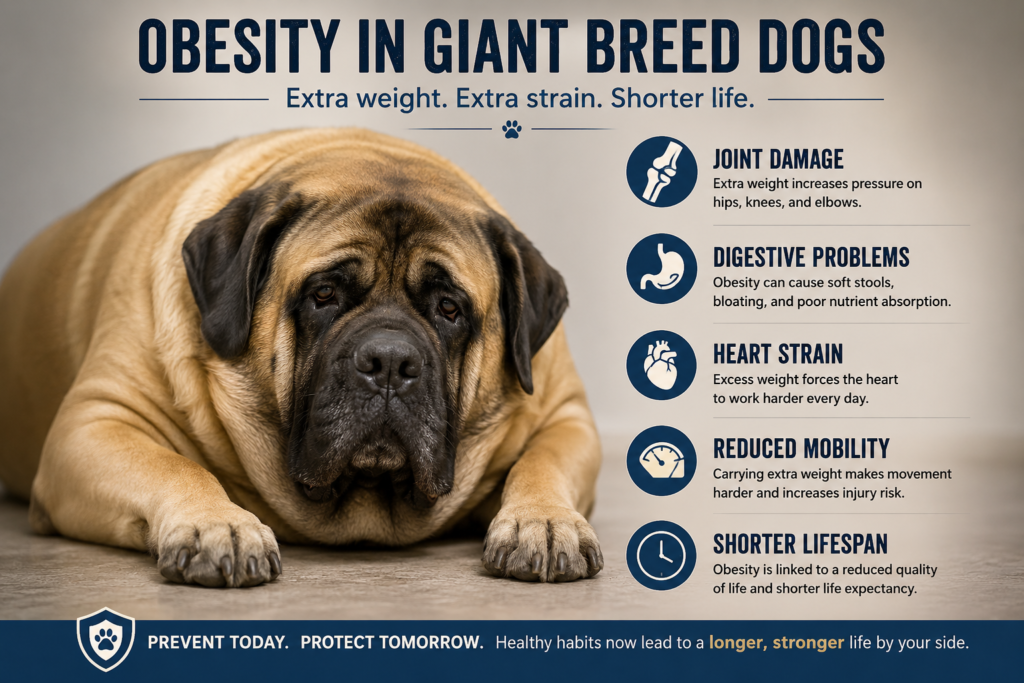
Obesity in dogs is not simply a cosmetic issue. It is a chronic health condition caused by excess body fat that interferes with normal function and long-term health. In giant breed dogs, the consequences are magnified because their skeletal system, heart, joints, and digestive tract already operate under enormous physical demand.
A five-pound gain on a Chihuahua may barely be noticeable. A thirty-pound gain on a giant breed may seem normal to the owner — but internally it can place dangerous stress on the hips, spine, heart, lungs, and digestive system.
Within the GiantBreeds.net D.A.W.G. system, obesity is also closely tied to stool quality and digestive health. Overfeeding, excessive treats, poor ingredient quality, and digestive inefficiency often show up first in the poop long before owners recognize the body condition changes. Loose stool, excessive stool volume, greasy feces, or inconsistent bowel movements can all become early warning signs that the dog’s nutritional balance is failing.
Obesity is not usually caused by a single bad meal. It is the result of hundreds of small decisions repeated every day.
Symptoms
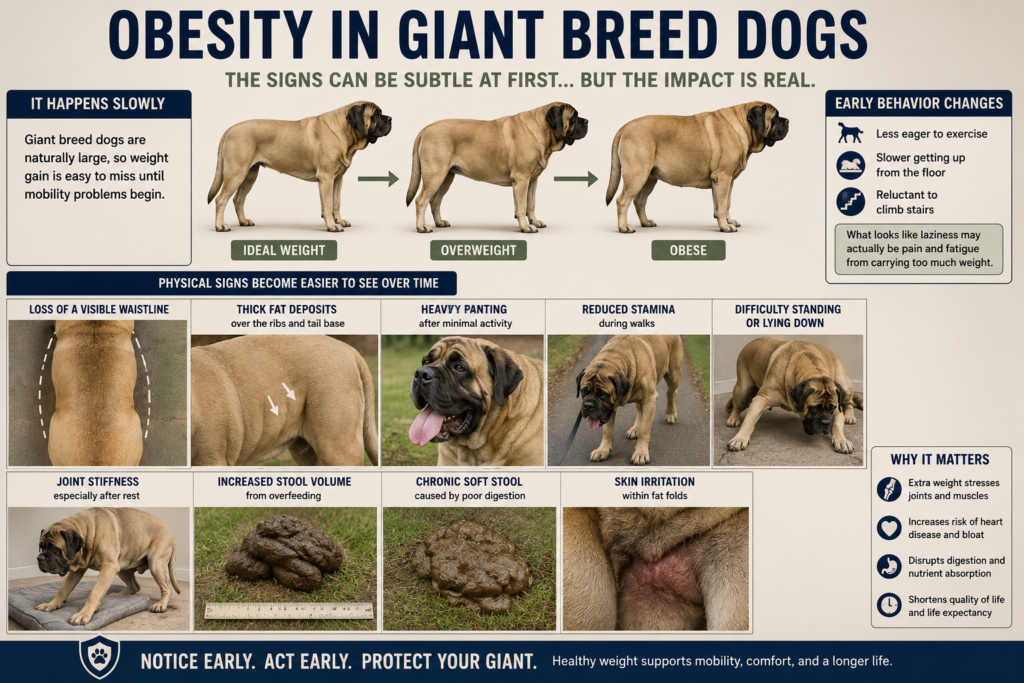
Obesity tends to happen slowly. Because giant breed dogs are naturally large, many owners do not notice the weight gain until mobility problems begin.
The earliest signs are often subtle. Your dog may become less eager to exercise, slower getting up from the floor, or reluctant to climb stairs. What once looked like laziness may actually be pain and fatigue from carrying too much weight.
Physically, the signs become easier to see over time:
- Loss of a visible waistline
- Thick fat deposits over the ribs and tail base
- Heavy panting after minimal activity
- Reduced stamina during walks
- Difficulty standing or lying down
- Joint stiffness, especially after rest
- Increased stool volume from overfeeding
- Chronic soft stool caused by poor digestion
- Skin irritation within fat folds
In giant breeds, obesity also dramatically increases the risk of:
- Hip dysplasia
- Arthritis
- Cruciate ligament injuries
- Heart disease
- Diabetes
- Respiratory distress
- Heat intolerance
- Bloat (GDV)
Because giant breeds already age faster than smaller dogs, excess weight often accelerates physical decline. A dog that should remain mobile and comfortable into old age may instead become physically broken down years earlier than expected.
Within the D.A.W.G. system, stool monitoring becomes especially important here. Obesity and digestive imbalance frequently travel together. Large, excessive bowel movements often indicate poor nutrient absorption or overfeeding rather than good nutrition.
Prevention
Obesity in Dogs | Catalyst Vet Explains
Preventing obesity starts long before a dog becomes visibly overweight.
The most effective prevention method is understanding that giant breeds do not need constant overfeeding to maintain healthy size. Many owners unintentionally create obesity by trying to make their dog “bigger,” especially during puppy growth stages. Rapid growth may look impressive early on, but it can permanently damage joints and structural development.
Healthy prevention begins with consistency:
- Measured feeding instead of free feeding
- Controlled treat intake
- Daily movement and exercise
- Routine weight monitoring
- High-quality digestible nutrition
- Regular stool observation through the D.A.W.G. system
Exercise matters, but nutrition matters more. A giant breed dog cannot out-exercise chronic overfeeding.
Prevention also connects directly to other sections of GiantBreeds.net. Poor nutrition increases stress on the digestive system, while obesity increases the risk of emergencies covered in the Emergency Care section — especially bloat, heatstroke, heart strain, and mobility collapse.
One of the simplest prevention tools is paying attention during cleanup. Healthy stool should remain firm, compact, and easy to pick up. Massive piles of loose waste often indicate the dog is receiving more calories and fillers than their body can properly use.
Nutritional Considerations
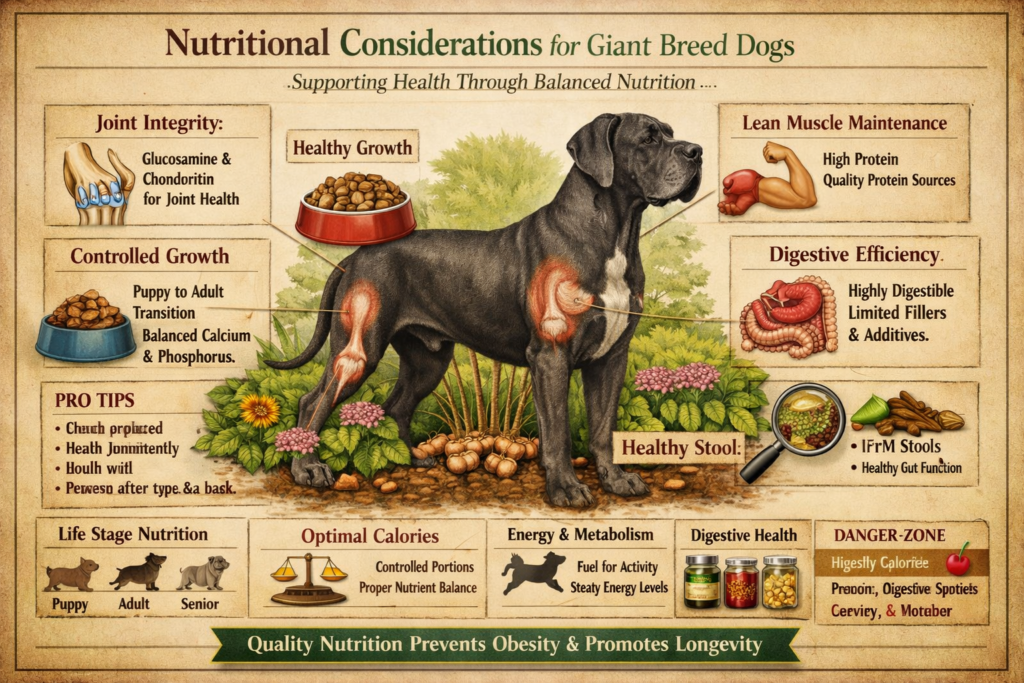
Nutrition plays a supporting role in nearly every health condition — whether through metabolic balance, inflammation control, structural support, or digestive stability.
While diet alone does not cure obesity, improper feeding dramatically increases physiological stress and worsens long-term outcomes. Calorie excess, nutrient imbalance, poor ingredient quality, and low digestibility all place additional strain on the body’s systems.
For giant breeds, nutrition must support:
- Joint integrity
- Controlled growth
- Lean muscle maintenance
- Digestive efficiency
- Stable energy levels
- Healthy stool formation
Proper nutritional alignment should consider:
- Life stage (Puppy, Adult, Senior)
- Activity level (Companion, Active, Working)
- Body condition and weight stability
- Digestive efficiency and stool consistency
- Ingredient quality and nutrient density
Many overweight giant breed dogs are not actually overnourished — they are undernourished while being overfed. Low-quality foods packed with fillers often create large stool volume because much of the food passes through unused.
This is where the D.A.W.G. system becomes valuable. Stool consistency, odor, color, and volume provide daily insight into how efficiently the dog is processing nutrition.
For a structured framework on adjusting feeding based on age, metabolism, and activity demand, readers should refer to the GiantBreeds.net Nutrition System Guide.
Monitoring digestion and body condition alongside veterinary care ensures that nutrition supports — rather than complicates — long-term stability.
Products to Help
Managing obesity successfully often requires changing the environment as much as changing the food.
Helpful tools may include:
- Elevated slow-feeder bowls to reduce rapid eating
- Measured feeding containers
- Joint-support supplements
- Orthopedic dog beds
- Weight-management dog foods
- Low-calorie training treats
- Dog-safe probiotics
- Mobility harnesses for senior giant breeds
- Interactive feeding toys that encourage slower eating
Stool-support probiotics can also help improve digestive efficiency, reduce excessive stool volume, and support healthier gut flora during weight management transitions.
Owners should avoid fad supplements or aggressive “rapid weight loss” products. Giant breed bodies do not tolerate sudden metabolic shifts well.
Action: Call the Vet

Some weight gain happens gradually. Other times, sudden obesity may point toward deeper medical problems.
Contact your veterinarian if your dog develops:
- Rapid unexplained weight gain
- Severe exercise intolerance
- Chronic diarrhea or constipation
- Collapse or breathing difficulty
- Swollen abdomen
- Sudden appetite changes
- Persistent lethargy
- Difficulty standing
- Black, bloody, or greasy stool
In giant breeds, obesity can hide serious secondary conditions including hypothyroidism, heart disease, fluid retention, or orthopedic damage.
If obesity is combined with bloating, unproductive retching, pacing, or abdominal swelling, treat it as an immediate emergency due to the risk of Gastric Dilatation-Volvulus (GDV). Readers should immediately reference the Emergency Care section of GiantBreeds.net.
Veterinary Treatment
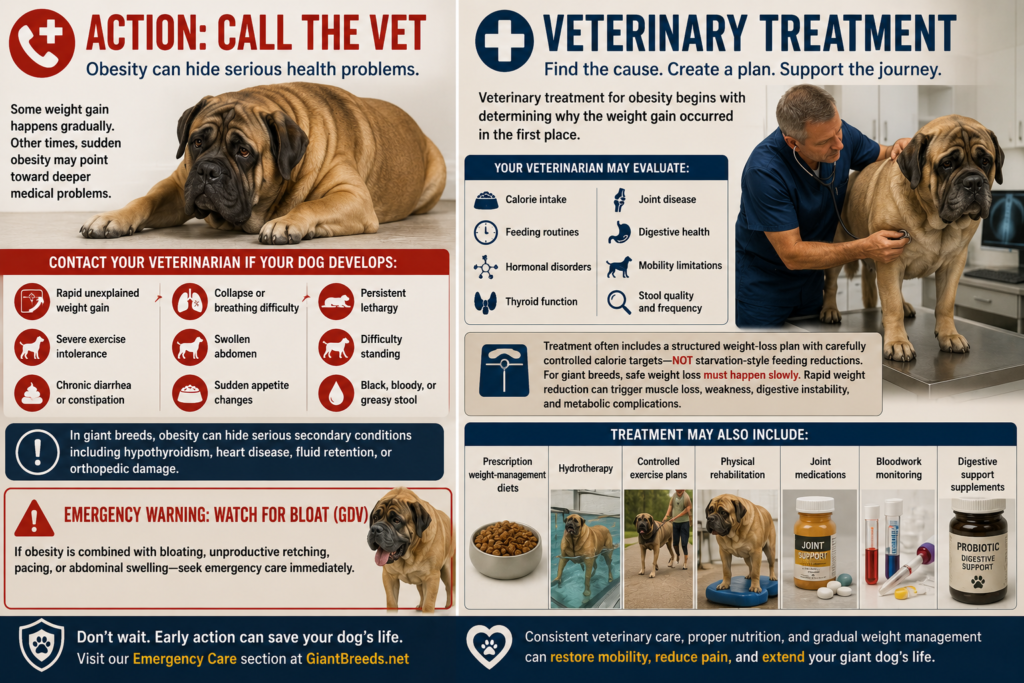
Veterinary treatment for obesity begins with determining why the weight gain occurred in the first place.
Your veterinarian may evaluate:
- Calorie intake
- Feeding routines
- Hormonal disorders
- Thyroid function
- Joint disease
- Digestive health
- Mobility limitations
- Stool quality and frequency
Treatment often includes a structured weight-loss plan with carefully controlled calorie targets rather than starvation-style feeding reductions.
For giant breeds, safe weight loss must happen slowly. Rapid weight reduction can trigger muscle loss, weakness, digestive instability, and metabolic complications.
Veterinarians may also recommend:
- Prescription weight-management diets
- Hydrotherapy
- Controlled exercise plans
- Physical rehabilitation
- Joint medications
- Bloodwork monitoring
- Digestive support supplements
Home Remedies
Mild weight issues can sometimes improve at home when caught early.
The safest home strategies include:
- Measuring every meal accurately
- Reducing high-calorie treats
- Replacing food rewards with play or training
- Increasing low-impact exercise gradually
- Adding short structured walks throughout the day
- Using healthy fiber sources under veterinary guidance
- Supporting digestion with dog-safe probiotics
Some owners unintentionally worsen obesity by confusing affection with feeding. Giant breeds especially thrive on interaction, structure, and companionship more than endless snacks.
Avoid crash diets or extreme fasting. Giant breeds require stable nutrition to protect joints, muscles, and organ function.
Risk Factors
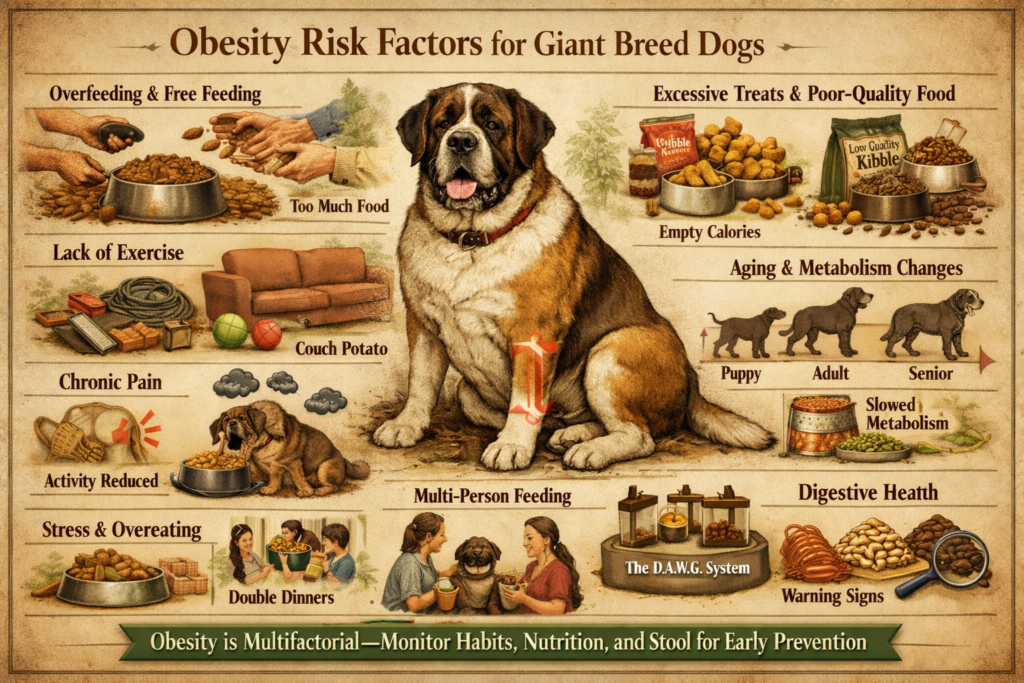
Obesity rarely develops from one single cause.
The most common risk factors include:
- Overfeeding
- Free feeding
- Lack of exercise
- Excessive treats
- Poor-quality food
- Aging
- Neutering or spaying metabolism changes
- Chronic pain reducing activity
- Digestive inefficiency
- Hormonal disorders
- Stress-related overeating
Environmental habits also matter. Multi-person households often accidentally double-feed dogs without realizing it.
The D.A.W.G. system becomes useful here because stool changes frequently appear before visible obesity becomes severe. Large, foul-smelling, inconsistent stool often indicates excess intake or poor digestion.
Genetic and Breed Considerations
Some giant breeds are genetically predisposed to weight gain and orthopedic strain.
Breeds commonly vulnerable include:
- Great Dane
- Saint Bernard
- Newfoundland
- Mastiff
- Bernese Mountain Dog
These breeds already place tremendous stress on their joints and cardiovascular systems even at ideal weight. Obesity compounds that stress exponentially.
Some breeds also possess slower metabolisms or lower natural activity levels, making calorie control especially important.
Because giant breeds mature slowly, nutritional mistakes during puppyhood can permanently affect skeletal structure and lifelong mobility.
Psychological Factors
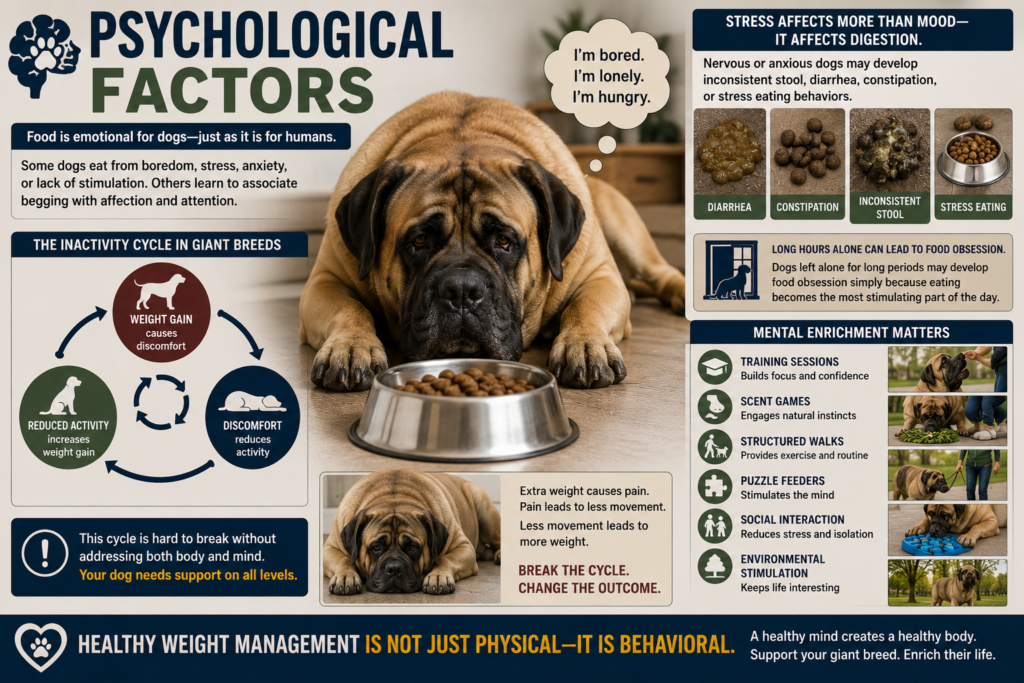
Food is emotional for dogs just as it is for humans.
Some dogs eat from boredom, stress, anxiety, or lack of stimulation. Others learn to associate begging with affection and attention.
In giant breeds, inactivity can create a cycle:
- Weight gain causes discomfort
- Discomfort reduces activity
- Reduced activity increases weight gain
Stress can also affect digestion directly. Nervous or anxious dogs may develop inconsistent stool, diarrhea, constipation, or stress eating behaviors.
Dogs left alone for long periods may develop food obsession simply because eating becomes the most stimulating part of the day.
Mental enrichment matters:
- Training sessions
- Scent games
- Structured walks
- Puzzle feeders
- Social interaction
- Environmental stimulation
Healthy weight management is not just physical — it is behavioral.
Surgical Options
Surgery is not a treatment for routine canine obesity, but obesity may worsen conditions that eventually require surgical intervention.
Excess weight dramatically increases the risk of:
- Torn cruciate ligaments
- Hip surgery complications
- Spinal injuries
- Bloat surgery risks
- Anesthesia complications
In some severe cases, obesity also limits surgical success and recovery because healing becomes harder under excessive physical strain.
For giant breeds, maintaining healthy weight is one of the best ways to avoid orthopedic surgery later in life.
Monitoring
Weight management succeeds through consistency, not guesswork.
Owners should regularly monitor:
- Body condition score
- Waist visibility
- Rib coverage
- Energy level
- Mobility
- Stool quality
- Stool volume
- Appetite changes
- Water intake
Think of poop as a metabolic report card. Changes in stool often reflect digestive imbalance before other symptoms become obvious.
A stool journal tied into the D.A.W.G. system can help identify:
- Overfeeding
- Food intolerance
- Digestive inefficiency
- Stress responses
- Poor ingredient quality
Routine photographs and monthly weight checks also help owners notice gradual changes that are easy to miss day to day.
Emergency Contacts
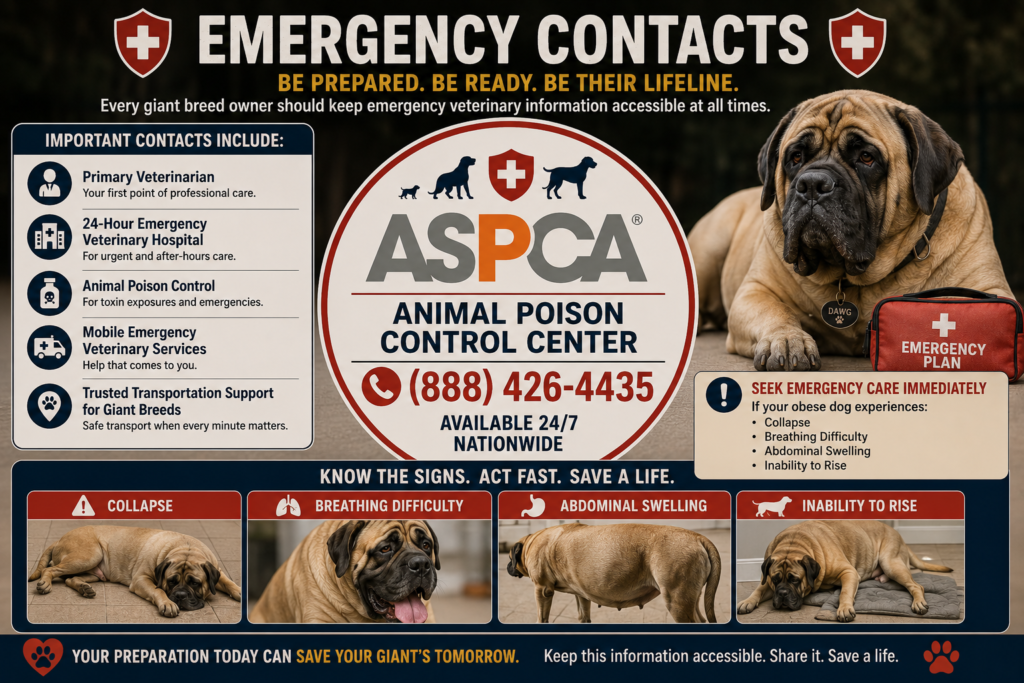
Every giant breed owner should keep emergency veterinary information accessible at all times.
Important contacts include:
- Primary veterinarian
- 24-hour emergency veterinary hospital
- Animal poison control
- Mobile emergency veterinary services
- Trusted transportation support for giant breeds
ASPCA Animal Poison Control Center
Phone: (888) 426-4435
If your obese dog experiences collapse, breathing difficulty, abdominal swelling, or inability to rise, seek emergency care immediately.
Final Thought: Heavy Dogs Carry Heavy Consequences
One extra treat does not create obesity. One skipped walk does not destroy a dog’s health. But over time, small habits become physical realities.
For giant breed dogs, those realities arrive faster and hit harder.
Their bodies already carry extraordinary weight. Obesity turns that natural burden into chronic stress on every organ, every joint, and every movement. And often, the earliest warnings appear not on the scale, but in the yard — inside the stool patterns owners clean up every day.
That is why the D.A.W.G. system matters.
Because sometimes the first sign your dog is struggling is not how they look.
It is what they leave behind.
