Digestive Awareness Wellness Guide (D.A.W.G.)
The GiantBreeds.net Master Guide to Gut Health, Stool Monitoring & Digestive Wellness
Every day your dog leaves behind one of the most honest health reports you will ever see.
It happens quietly in the yard, on a walk, beside a trail, or in the corner of the kennel. Most owners grab a bag, clean it up, and move on without another thought. But hidden inside that moment is an enormous amount of information about your dog’s health.
Your dog’s stool reflects digestion, hydration, nutrition, stress, parasites, inflammation, organ function, bacterial balance, and sometimes even life-threatening emergencies.
For giant breed dogs especially, digestive awareness matters.
A Great Dane with chronic soft stool may be showing the earliest signs of food intolerance. A Mastiff suddenly straining to defecate may be dehydrated. A Saint Bernard with black stool could be experiencing internal bleeding. A Newfoundland with bloating and failed vomiting attempts may be entering a deadly Gastric Dilatation-Volvulus emergency.
That is why the D.A.W.G. System exists.
The Digestive Awareness Wellness Guide was designed to help owners understand what their dog’s digestive system is trying to communicate long before small issues become major health crises.
This is not just a guide about poop. It is a guide about awareness.
Why Digestive Health Matters in Giant Breed Dogs
Giant breed dogs live under different physical stresses than smaller dogs.
Their bodies process larger food volumes. Their joints carry enormous weight. Their digestive systems often move more slowly. Their risk for bloat, obesity, orthopedic disease, and metabolic stress is dramatically higher.
Even normal digestion creates larger stool volume, more gas production, and greater strain on the intestinal tract.
Because of that, digestive problems in giant breeds often become visible in the stool before they become visible anywhere else.
Changes in color, texture, smell, frequency, or stool volume may signal:
- Poor nutrition
- Parasites
- Stress
- Toxic food exposure
- Inflammatory bowel disease
- Pancreatic problems
- Kidney dysfunction
- Liver disease
- Obesity-related digestive strain
- Hormonal disorders
- Internal bleeding
- Food allergies
- Severe dehydration
- Dangerous gastrointestinal obstruction
Learning to recognize these signs early gives owners a powerful advantage.
The D.A.W.G. Philosophy
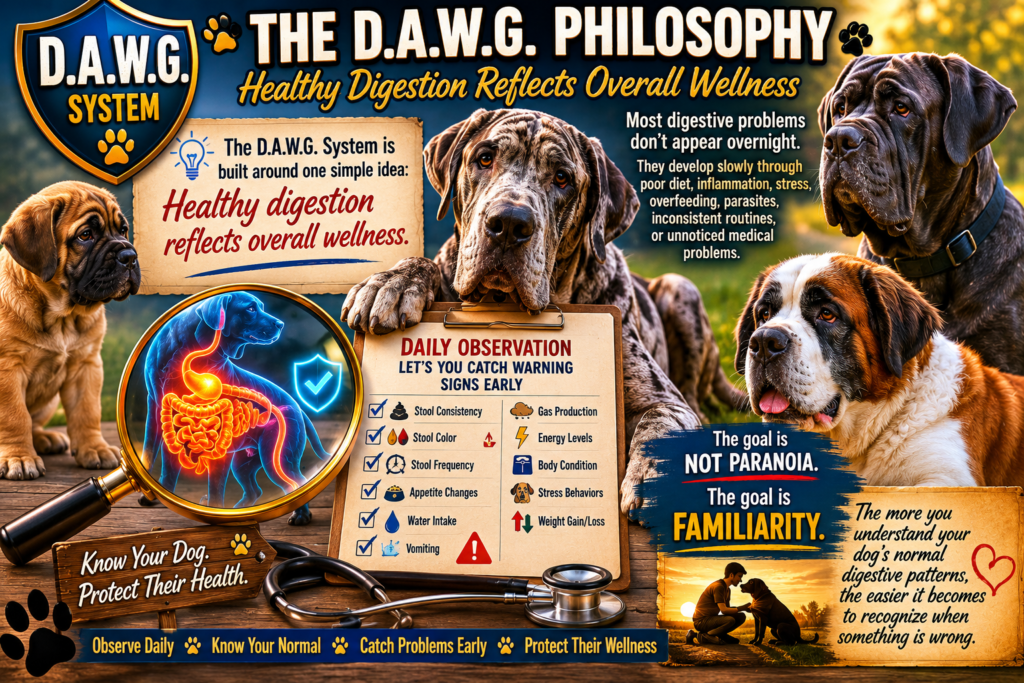
The D.A.W.G. System is built around one simple idea:
Healthy digestion reflects overall wellness.
Most digestive problems do not appear overnight. They develop slowly through poor diet, chronic inflammation, overfeeding, stress, lack of exercise, parasites, inconsistent feeding schedules, or unnoticed medical problems.
Daily observation allows owners to catch warning signs early.
That means paying attention to:
- Stool consistency
- Stool color
- Stool frequency
- Appetite changes
- Water intake
- Vomiting
- Gas production
- Energy levels
- Body condition
- Stress behaviors
- Weight gain or weight loss
The goal is not paranoia.
The goal is familiarity.
The more you understand your dog’s normal digestive patterns, the easier it becomes to recognize when something is wrong.
Follow the D.A.W.G. Symbol
Throughout GiantBreeds.net, the D.A.W.G. logo marks articles connected to digestive health, nutrition, stool changes, metabolic wellness, toxin exposure, parasites, hydration, and gastrointestinal function.
Whenever you see this symbol, it means the topic may have a digestive component worth paying attention to.
Use it as your pathway back to the Digestive Awareness Wellness Guide — your central reference for stool tracking, digestive warning signs, gut health education, and understanding what your dog’s body may be communicating through everyday digestive patterns.
What Healthy Dog Stool Should Look Like
Healthy stool is one of the strongest signs that your dog’s digestive system is functioning properly.
In most giant breed dogs, healthy stool should be:
- Medium to dark brown
- Firm but not rock hard
- Easy to pick up
- Moist without being slimy
- Consistent in shape
- Passed without visible pain or straining
Healthy stool frequency varies between dogs.
Some giant breeds defecate twice daily. Others may go three or four times depending on meal size, diet composition, exercise, age, and metabolism.
What matters most is consistency.
A dog with stable appetite, normal energy, and predictable stool quality is usually maintaining healthy digestive balance.
The Stool Color & Texture Index
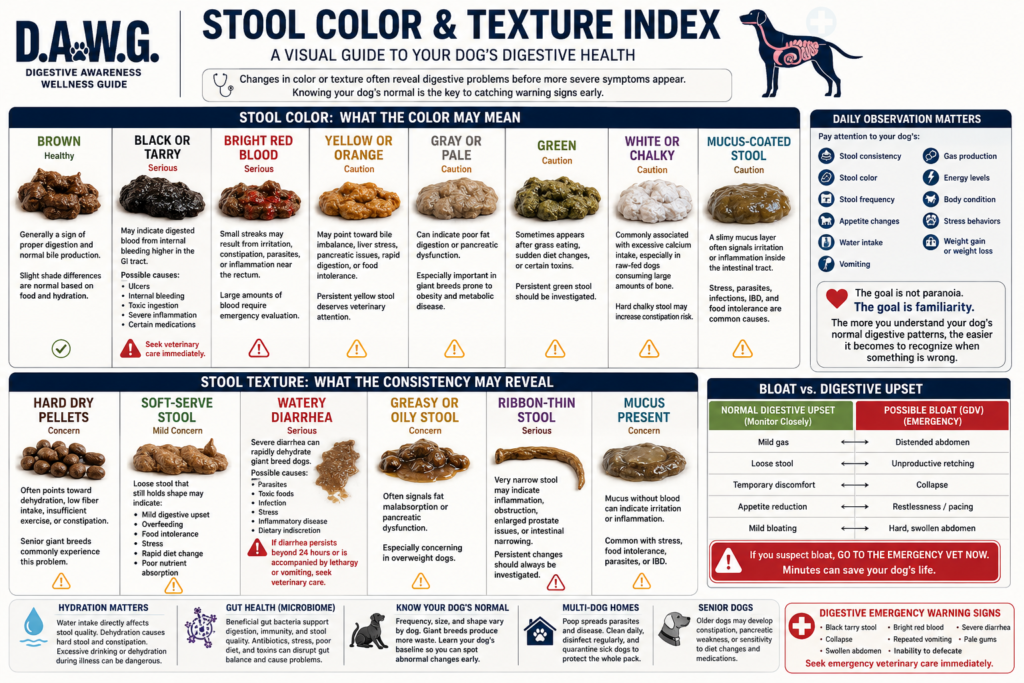
One of the most important skills a dog owner can develop is understanding stool appearance.
Color and texture changes often reveal digestive problems before more severe symptoms appear.
Brown Stool
Healthy brown stool is generally a sign of proper digestion and normal bile production.
Slight shade differences happen naturally based on food ingredients and hydration.
Black or Tarry Stool
Black stool can indicate digested blood from internal bleeding higher in the gastrointestinal tract.
This should always be treated seriously.
Possible causes include:
- Ulcers
- Internal bleeding
- Toxic ingestion
- Severe inflammation
- Certain medications
Seek veterinary care immediately.
Bright Red Blood
Small streaks of red blood may result from irritation, constipation, parasites, or inflammation near the rectum.
Large amounts of blood require emergency evaluation.
Yellow or Orange Stool
Yellow stool may point toward bile imbalance, liver stress, pancreatic issues, rapid digestion, or food intolerance.
Persistent yellow stool deserves veterinary attention.
Gray or Pale Stool
Pale stool can indicate poor fat digestion or pancreatic dysfunction.
This is especially important in giant breeds prone to obesity and metabolic disease.
Green Stool
Green stool sometimes appears after grass eating, sudden diet changes, or certain toxins.
Persistent green stool should be investigated.
White or Chalky Stool
White stool is commonly associated with excessive calcium intake, especially in raw-fed dogs consuming large amounts of bone.
Hard chalky stool may increase constipation risk.
Mucus-Coated Stool
A slimy mucus layer often signals irritation or inflammation inside the intestinal tract.
Stress, parasites, infections, inflammatory bowel disease, and food intolerance are common causes.
Stool Texture: What Consistency Reveals
Texture matters just as much as color.
Hard Dry Pellets
Hard stool often points toward dehydration, low fiber intake, insufficient exercise, or constipation.
Senior giant breeds commonly experience this problem.
Soft-Serve Stool
Loose stool that still holds shape may indicate:
- Mild digestive upset
- Overfeeding
- Food intolerance
- Stress
- Rapid diet change
- Poor nutrient absorption
Watery Diarrhea
Severe diarrhea can rapidly dehydrate giant breed dogs.
Possible causes include:
- Parasites
- Toxic foods
- Infection
- Stress
- Inflammatory disease
- Dietary indiscretion
If diarrhea persists beyond 24 hours or appears alongside lethargy or vomiting, veterinary care is needed.
Greasy or Oily Stool
Greasy stool often signals fat malabsorption or pancreatic dysfunction.
This is especially concerning in overweight dogs.
Ribbon-Thin Stool
Very narrow stool may indicate inflammation, obstruction, enlarged prostate issues, or intestinal narrowing.
Persistent changes should always be investigated.
Hydration & Digestive Health
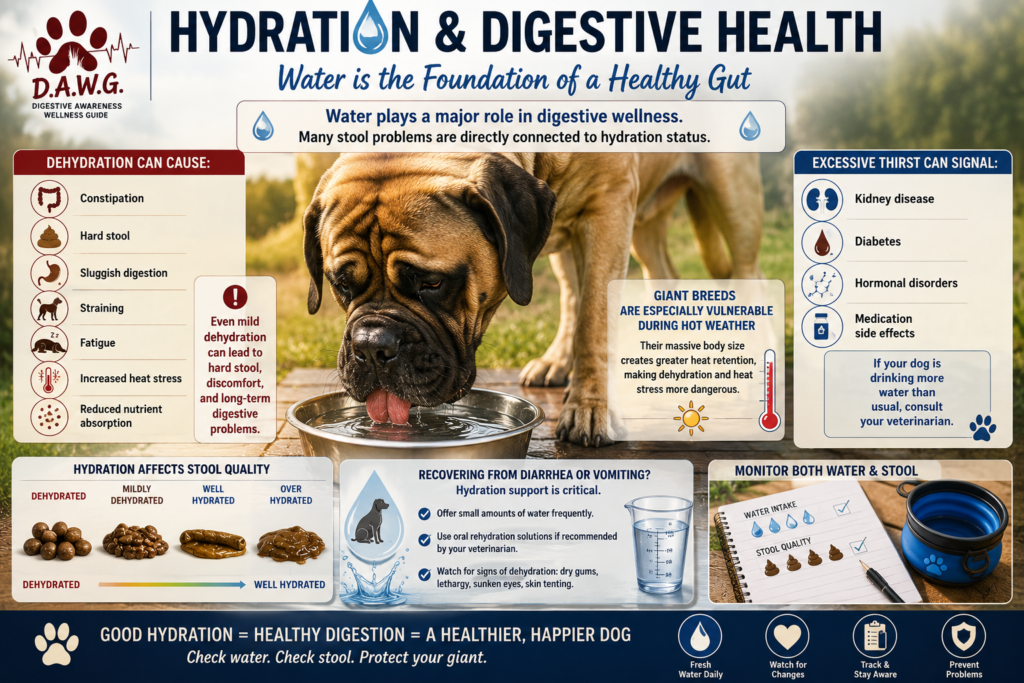
Water plays a major role in digestive wellness.
Many stool problems are directly connected to hydration status.
Dehydration can cause:
- Constipation
- Hard stool
- Sluggish digestion
- Straining
- Fatigue
- Increased heat stress
- Reduced nutrient absorption
Meanwhile excessive thirst can sometimes signal:
- Kidney disease
- Diabetes
- Hormonal disorders
- Medication side effects
Giant breeds are especially vulnerable during hot weather because their massive body size creates greater heat retention.
Dogs recovering from diarrhea or vomiting may require careful hydration support to prevent dangerous fluid imbalance.
Monitoring water intake is just as important as monitoring stool.
Gut Health & the Canine Microbiome
Inside your dog’s digestive system lives an enormous hidden ecosystem made up of bacteria, enzymes, fungi, and other microscopic organisms known collectively as the gut microbiome.
This internal community is not harmful — in a healthy dog, it is essential to life. Think of it as an invisible digestive workforce helping your dog process food, defend against disease, regulate inflammation, and maintain internal balance every single day.
The microbiome influences far more than digestion alone. It plays a role in:
• Digestion
• Nutrient absorption
• Immune health
• Stool quality
• Inflammation
• Stress response
• Weight regulation
A balanced microbiome helps the digestive system operate smoothly. Food moves properly, nutrients are absorbed efficiently, stool remains more stable, and the body’s natural defenses function more effectively.
When that microbial balance becomes disrupted — sometimes called gut dysbiosis — problems can begin to ripple throughout the body, not just the intestines.
A disrupted microbiome may contribute to:
• Chronic diarrhea
• Gas
• Poor stool quality
• Food sensitivities
• Skin problems
• Obesity
• Inflammatory bowel disease
Many everyday factors can disturb digestive balance without owners realizing it.
Common microbiome disruptors include:
• Sudden food changes
• Poor-quality diets
• Chronic stress
• Antibiotic use
• Overfeeding
• Parasites
• Toxic food exposure
This is one reason veterinarians often recommend slow diet transitions, consistent feeding routines, digestive monitoring, and targeted probiotic support during digestive recovery or dietary changes.
Healthy gut bacteria thrive on stability, quality nutrition, and routine. In giant breed dogs — where digestive stress, metabolic strain, and dietary mistakes can carry larger consequences — supporting the microbiome becomes an important part of long-term wellness.
If you are exploring probiotics, digestive supplements, slow-feed tools, hydration support, or microbiome-friendly feeding products, visit the Giant Breeds Supply Co. Store, where we highlight practical products chosen to support digestive health and everyday wellness in giant breed dogs.
What’s Normal for YOUR Dog?

Dog paw sidebar information symbol
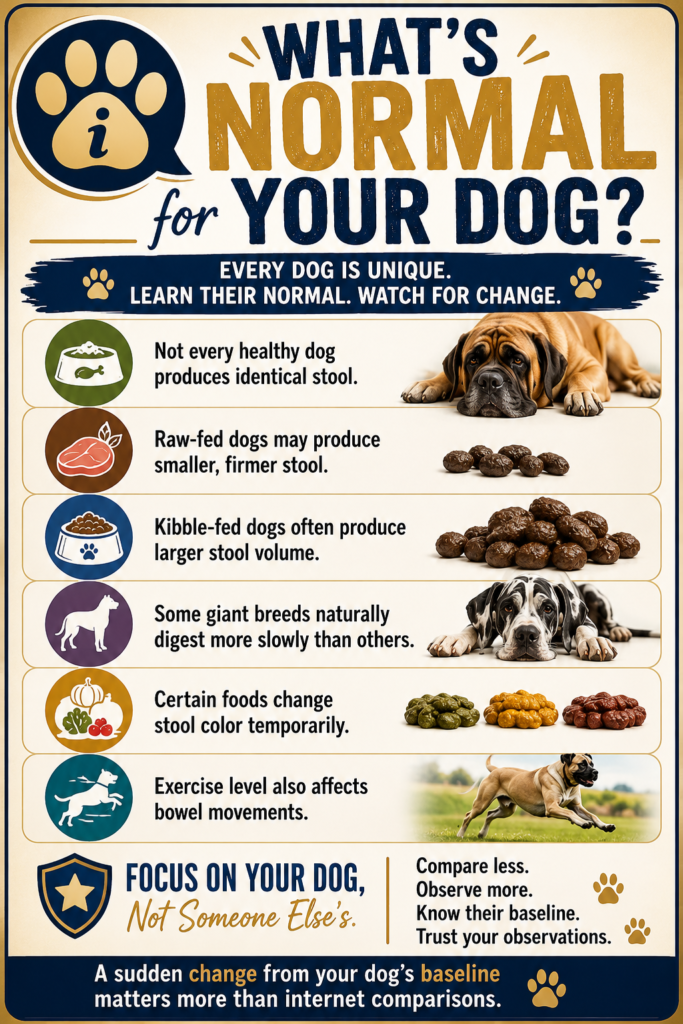
One of the most overlooked parts of digestive monitoring is understanding individual variation.
Not every healthy dog produces identical stool.
Raw-fed dogs may produce smaller, firmer stool.
Kibble-fed dogs often produce larger stool volume.
Some giant breeds naturally digest more slowly than others.
Certain foods change stool color temporarily.
Exercise level also affects bowel movements.
That is why owners should focus less on comparing dogs to each other and more on learning what is normal for their own dog.
A sudden change from your dog’s baseline matters more than internet comparisons.
Obesity, Digestion & Stool Quality
Digestive health and body condition are deeply connected — and nowhere is that relationship more obvious than in overweight dogs.
Many owners think obesity is simply about appearance or carrying extra pounds. In reality, excess weight affects nearly every system in the body, including the digestive tract. In giant breeds, even moderate weight gain can create physiological stress that changes how food moves through the body, how nutrients are absorbed, and what ultimately appears in the yard.
Overweight giant breed dogs commonly experience digestive changes such as:
• Slower digestion
• Increased gas
• Larger stool volume
• Soft stool
• Pancreatic strain
• Reduced activity
• Chronic inflammation
When a dog carries excessive body fat, digestion often becomes less efficient. Slower movement through the gastrointestinal tract may increase bloating, gas production, or inconsistent stool quality. Overfeeding itself can contribute to larger stool volume simply because the body is being asked to process more food than it actually needs.
Poor-quality diets frequently make the problem worse. Diets overloaded with fillers, excess calories, or low-quality fats may create softer stool, increased waste output, and greater digestive irritation. Some overweight dogs also develop altered gut bacteria — changes in the microbiome that can influence nutrient absorption, inflammation, and stool consistency.
The pancreas can also come under strain. High-fat diets, excessive treats, table scraps, and chronic overfeeding increase digestive workload and may raise the risk of pancreatic dysfunction in susceptible dogs.
The consequences of obesity extend far beyond digestion alone. Excess body fat increases the risk of:
• Arthritis
• Heat stress
• Breathing difficulty
• Diabetes
• Reduced mobility
• Cardiovascular stress
These secondary problems often circle back and worsen digestive health even further.
For example, painful arthritis may reduce exercise. Less movement can slow digestion and encourage additional weight gain. Heat stress may reduce appetite or water intake, affecting hydration and stool quality. Breathing problems and reduced stamina can make activity increasingly difficult, reinforcing the cycle of inactivity and obesity.
In giant breeds, this cycle can become surprisingly self-reinforcing:
The dog gains weight → movement becomes uncomfortable → activity decreases → digestion slows → weight gain accelerates.
The gut often notices the problem before owners do.
Soft stool, increased stool volume, excess gas, greasy stool, or inconsistent bowel habits may sometimes serve as early clues that nutrition, calorie intake, or body condition are drifting in the wrong direction.
That is one of the core ideas behind the D.A.W.G. philosophy: stool does not simply reflect what your dog ate yesterday — it can reveal how well the entire body is functioning.
Monitoring stool consistency alongside appetite, body condition, activity level, and weight trends often helps owners recognize when overfeeding, poor nutrition, or metabolic stress are beginning to affect long-term health.
Related Article:
Toxic Foods & Digestive Emergencies
Many dangerous foods reveal themselves first through digestive symptoms.
Sometimes the warning signs begin within minutes. Other times they develop slowly over several hours, making it easy for owners to dismiss them as “a little stomach upset” or a harmless dietary mistake.
The problem is that digestive distress is often the body’s first alarm bell.
Vomiting, diarrhea, abdominal pain, excessive drooling, bloating, blood in stool, restlessness, or sudden collapse can all appear after toxin exposure.
And toxins are not always obvious.
Many owners know chocolate is dangerous. Far fewer realize the garlic seasoning sprinkled on leftover pizza, the onion powder hidden inside soup, the xylitol sweetener in sugar-free gum, or the greasy holiday scraps handed under the table can create serious medical emergencies — especially in giant breeds where digestive complications can escalate quickly.
Some of the most dangerous foods for dogs include:
• Chocolate
• Grapes and raisins
• Onions
• Garlic
• Xylitol
• Alcohol
• Macadamia nuts
• Cooked bones
• Excessive fatty foods
Each carries its own risk profile.
Chocolate can overstimulate the nervous system and heart. Grapes and raisins may trigger sudden kidney failure in some dogs, sometimes from surprisingly small amounts. Onions and garlic — even powdered seasonings, sauces, pizza toppings, and leftovers — can damage red blood cells and interfere with oxygen transport.
Xylitol, commonly found in sugar-free products, is especially dangerous because it can trigger a rapid insulin surge that causes life-threatening low blood sugar. Cooked bones may splinter, leading to choking, intestinal obstruction, perforation, or bloody stool.
And fatty foods deserve more respect than many owners realize. Bacon grease, holiday drippings, fried foods, or rich table scraps can overwhelm digestion and contribute to pancreatitis, severe diarrhea, abdominal pain, or dangerous bloating.
Certain toxins can also cause:
• Liver failure
• Kidney failure
• Neurological damage
• Internal bleeding
• Heart rhythm abnormalities
Not every poisoning case begins dramatically. Sometimes the first clue is simply a sudden stool change, unusual gas production, vomiting after meals, or a dog that “just doesn’t seem right.”
Within the D.A.W.G. system, digestive symptoms are treated as information — not inconveniences.
Never ignore sudden digestive distress after suspected toxin exposure. If your dog develops vomiting, collapse, severe diarrhea, abdominal swelling, tremors, breathing difficulty, bloody stool, or neurological changes after eating something questionable, contact your veterinarian or poison control immediately.
Related Articles: Coming Soon
🐶 Toxic Foods
🐶 Onion Poisoning (Allium Toxicosis)
🐶 Raw Diets & Poop Changes
🐶 Emergency Care Section
Parasites, Bacteria & Environmental Contamination
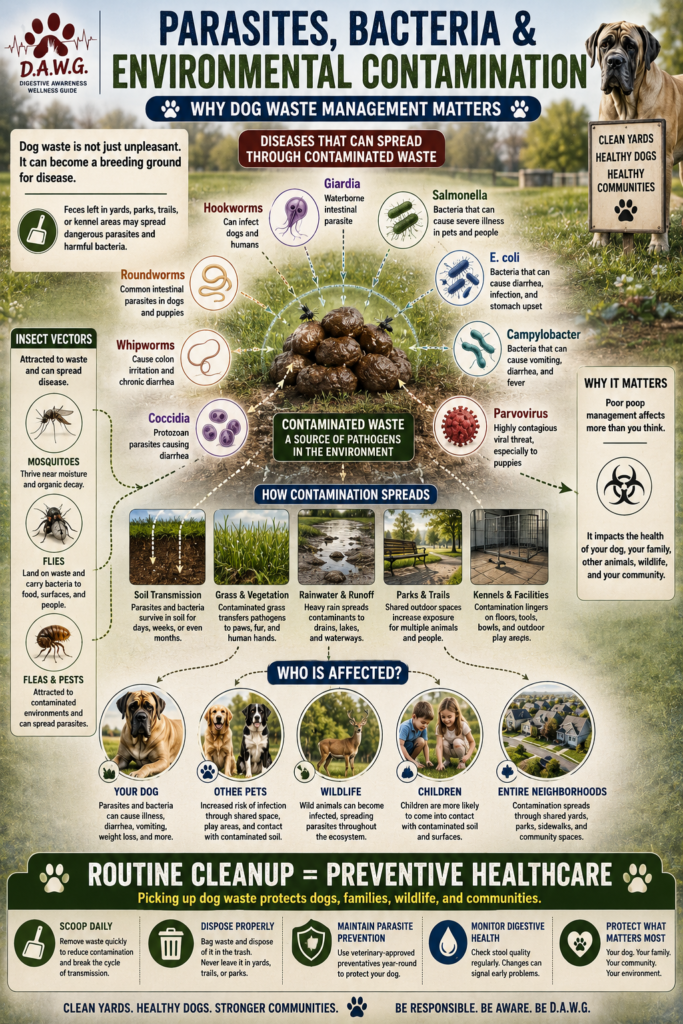
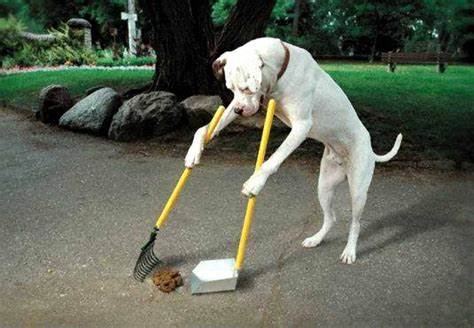
Dog waste is not just unpleasant.
It can become a breeding ground for disease.
Feces left in yards, parks, trails, or kennel areas may spread:
- Giardia
- Hookworms
- Roundworms
- Whipworms
- Coccidia
- Salmonella
- E. coli
- Campylobacter
- Parvovirus
Mosquitoes, flies, fleas, and other insects are also attracted to waste-contaminated environments.
That means poor poop management affects:
- Your dog
- Other pets
- Wildlife
- Children
- Entire neighborhoods
Routine cleanup is one of the most important forms of preventive healthcare.
Multi-Dog Households & Kennel Risks
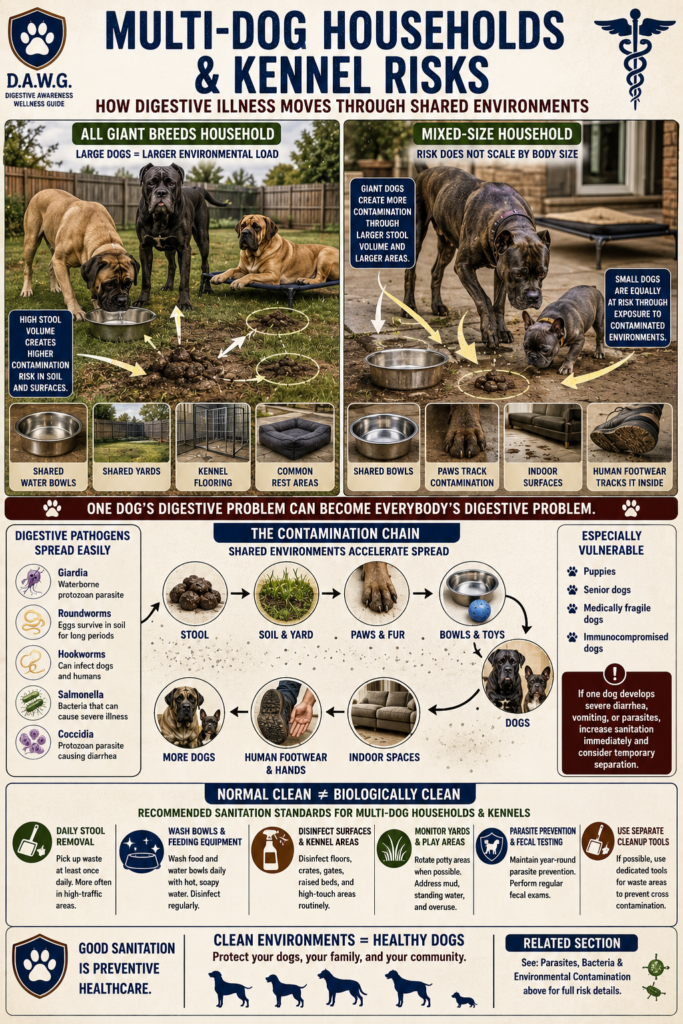
Digestive illness spreads quickly anywhere multiple dogs share living space.
Kennels, breeders, rescue environments, boarding facilities, and multi-dog homes face a much higher contamination risk because parasites, bacteria, viruses, and digestive pathogens move easily through shared environments. As discussed in the Parasites, Bacteria & Environmental Contamination section above, fecal contamination is one of the most common — and most overlooked — disease pathways in canine health.
Many owners do not realize how quickly a single digestive issue can become a household problem.
In a home with three giant breeds sharing one yard, one water source, and common sleeping areas, exposure levels rise dramatically. A dog carrying Giardia, hookworms, Salmonella, roundworms, Coccidia, or bacterial diarrhea may contaminate surfaces long before obvious symptoms appear.
Mixed-size households create their own challenges.
A home with a Cane Corso and a French Bulldog, for example, does not simply have “two dogs.” It has two very different exposure patterns. A giant breed produces substantially larger stool volume, larger contaminated areas in the yard, and often greater environmental load. Meanwhile, the smaller dog may drink from the same bowls, investigate the same stool areas, walk through contaminated soil, or groom contaminated paws afterward.
The risk does not scale by body size.
Sometimes the little dog gets sick first.
Common transmission points include:
• Shared water bowls
• Shared yards
• Kennel flooring
• Contaminated soil
• Communal play areas
• Grooming tools
• Human footwear tracking fecal material indoors
Sanitation standards are another area where many otherwise responsible owners underestimate risk.
Normal clean
“Normal clean” is not always biologically clean.
In a multi-dog household, basic digestive sanitation should generally include:
• Daily stool removal — not weekly cleanup
• Routine washing of water bowls and feeding equipment
• Periodic disinfection of kennel flooring, crates, and high-traffic surfaces
• Monitoring muddy areas, standing water, and heavily used potty zones
• Separate cleanup tools for waste areas when possible
• Regular parasite prevention and veterinary fecal screening
Yards deserve special attention. Repeated elimination in the same section of grass can slowly create concentrated contamination zones where parasite eggs, bacteria, and fecal organisms accumulate in soil — particularly during warm, damp weather.
Puppies, senior dogs, medically fragile dogs, and immunocompromised animals are especially vulnerable.
If one dog develops severe diarrhea, vomiting, confirmed parasites, or unexplained digestive illness, owners should increase sanitation immediately, intensify observation of the other animals, and consider temporary separation until veterinary guidance is obtained.
The D.A.W.G. rule for multi-dog homes is simple:
One dog’s digestive problem is potentially everybody’s digestive problem.
🧼 Yard Sanitation After Pickup: Is Picking Up Enough?
Most owners believe dog waste management ends when the poop goes into a bag.
Unfortunately, digestive health, parasite control, and environmental safety do not always end there.
Anyone who owns giant breeds knows the reality: you can pick up carefully and still leave residue behind. Soft stool sticks to grass blades. Diarrhea soaks into soil. Small fragments remain after cleanup. In a multi-dog yard, those leftovers matter more than most people realize.
That is especially important when dealing with digestive illness, parasites, toxic food exposure, diarrhea, or dogs recovering from infection.
(See also: Parasites, Bacteria & Environmental Contamination above.)
What Happens To The Part You Miss?
Residual fecal material can continue harboring organisms such as:
• Giardia
• Hookworms
• Roundworms
• Coccidia
• Salmonella
• E. coli
• Campylobacter
• Viral contamination in high-risk situations
Moisture, shade, crowded dog populations, and poor drainage may allow contamination to persist longer than owners expect.
Is Picking Up Enough?
For healthy dogs with normal stool and good sanitation habits?
Usually prompt daily pickup is the foundation of good yard hygiene.
But during digestive illness, parasite treatment, diarrhea outbreaks, or multi-dog household problems, additional sanitation becomes important.
Think of pickup as Step One — not always the entire solution.
Should You Spray The Yard?
Owners often ask if they should spray the lawn with bleach, disinfectant, vinegar, or “poop dissolver.”
The answer depends on the situation.
For normal healthy yards:
Routine chemical spraying is usually unnecessary.
For hard surfaces such as concrete kennel floors, patios, gravel runs, artificial turf, or kennel pads, targeted disinfection can be useful when disease risk exists.
For living grass yards:
Heavy disinfectants are usually a poor choice.
Bleach can damage grass, harm beneficial soil organisms, and becomes much less effective when organic matter, dirt, or vegetation are present.
So What Should Owners Do?
Good yard sanitation is surprisingly low-tech.
Recommended practices include:
• Immediate waste pickup
• Frequent cleanup in shared yards
• Shorter grass for easier detection
• Improved drainage to reduce damp contamination zones
• Increased sunlight exposure where possible
• Temporary rotation of potty areas during illness
• Dedicated “sick dog” elimination zones during parasite treatment
• Cleaning footwear, tools, and scoops
Sunlight, drying, airflow, and time are powerful natural sanitation tools outdoors. Many organisms survive far better in cool, wet, shaded environments.
What About Rain?
Rain does not magically sanitize a yard.
Rain can dilute or spread contamination rather than eliminate it.
Parasites and bacteria may remain in soil, damp grass, muddy areas, drainage channels, or standing water after storms. Wet conditions can sometimes make reinfection risk worse in heavily used dog areas.
If your dog has diarrhea, parasites, or infectious digestive disease, do not assume “the rain washed it away.”
What Do You Do With 10 Pounds of Giant Breed Poop?
Welcome to giant breed ownership.
Large dogs create a sanitation challenge that small-breed owners often underestimate.
Practical disposal options include:
• Sealed bag disposal with household trash (local rules apply)
• Dedicated dog-waste compost systems designed specifically for pet waste
• Enzyme-based pet waste digesters where permitted
• Outdoor dog waste disposal units
Never place untreated dog waste into edible garden compost.
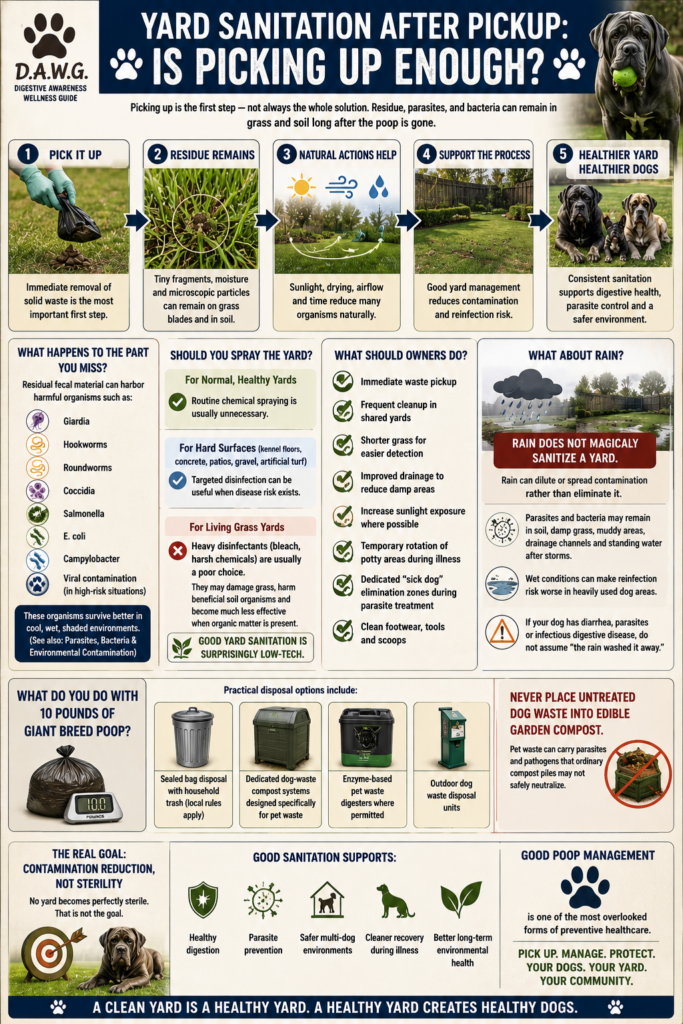
Pet waste can carry parasites and pathogens that ordinary compost piles may not safely neutralize.
The Real Goal: Contamination Reduction, Not Sterility
No yard becomes perfectly sterile.
That is not the goal.
The goal is reducing contamination enough to support:
• Healthy digestion
• Parasite prevention
• Safer multi-dog environments
• Cleaner recovery during illness
• Better long-term environmental health
Good poop management is not glamorous.
But in the D.A.W.G. system, it is one of the most overlooked forms of preventive healthcare.
Raw Diets & Poop Changes
Raw-fed dogs often produce different stool characteristics than kibble-fed dogs.
Owners commonly notice:
- Smaller stool volume
- Firmer consistency
- Lighter coloration
- Increased calcium-related hardness
However raw diets also carry additional bacterial risks if improperly handled.
Improperly balanced raw feeding may contribute to:
- Constipation
- Nutritional imbalance
- Bacterial contamination
- Excessive calcium intake
- Digestive instability
Monitoring stool quality becomes especially important when feeding raw diets.
The digestive system and nervous system are deeply connected
Your dog’s gut does not operate independently from their emotions, environment, or daily routine. Fear, excitement, loneliness, chronic stress, and anxiety can all influence how the digestive tract functions. In both humans and dogs, stress hormones affect intestinal movement, stomach acid production, inflammation levels, appetite regulation, and even the balance of healthy gut bacteria.
An anxious dog may develop:
• Diarrhea
• Constipation
• Mucus stool
• Appetite changes
• Vomiting
• Food obsession
• Coprophagia (poop eating)
One commonly overlooked digestive trigger in modern dogs is separation anxiety.
Dogs experiencing separation distress are not simply “being dramatic” or “acting out.” When a dog spends hours in a heightened state of anxiety waiting for their owner to return, the body may remain flooded with stress hormones for extended periods. Over time, this can disrupt normal digestion, alter gut motility, increase inflammation, and contribute to inconsistent stool quality.
Some dogs with separation anxiety develop chronic soft stool, stress diarrhea, reduced appetite, vomiting, excessive drooling, compulsive eating behaviors, or sudden digestive upset that seems to happen primarily when left alone.
In giant breeds, this issue can become especially complicated because their emotional needs, exercise requirements, and environmental needs are often substantial. A bored, under-stimulated, socially isolated giant breed dog may begin developing a cycle of stress, inactivity, digestive instability, and behavioral frustration.
Dogs left alone for long periods sometimes develop digestive problems simply because chronic stress continuously interferes with healthy gut function.
Mental enrichment matters.
Healthy digestion is supported by:
• Exercise
• Training
• Structured routine
• Environmental enrichment
• Social interaction
• Predictable feeding schedules
Behavioral health and digestive health are inseparable.
Related Article: 🐶 Separation Anxiety (Coming Soon)
The Poop-Eating Problem (Coprophagia)
The Scoop on Poop: Why Dogs Eat Poop (Coprophagia)
🎬 Recommended Viewing: Understanding Coprophagia
Want a deeper explanation of why dogs eat poop?
This veterinary-focused video explores the behavioral, digestive, medical, and instinctive causes behind coprophagia, including stress, boredom, digestive disorders, parasites, and learned behavior.
Few behaviors disturb owners faster than watching their dog eat feces.
But coprophagia is often a symptom rather than simply a bad habit.
Dogs may eat stool because of:
- Nutritional imbalance
- Digestive disorders
- Parasites
- Stress
- Boredom
- Learned behavior
- Enzyme deficiency
- Food insecurity instincts
Some mothers naturally consume puppy waste to protect the den from predators and disease.
Modern dogs sometimes retain pieces of this instinct.
The solution is not punishment.
The solution is identifying the underlying trigger.
Bloat vs Normal Digestive Upset
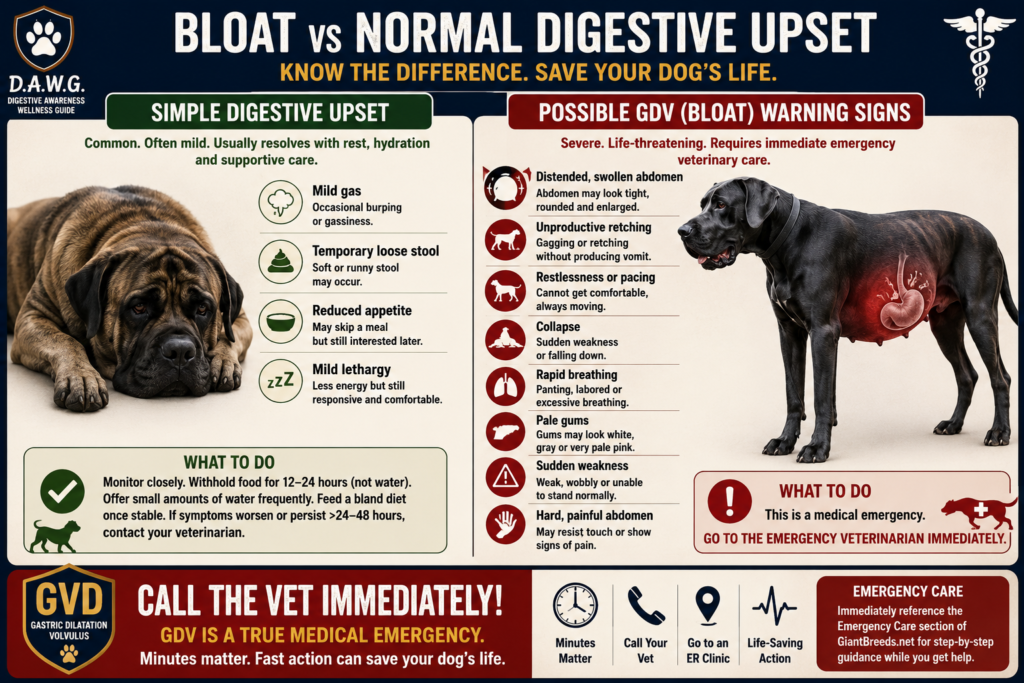
One of the most important things giant breed owners must learn is the difference between ordinary digestive discomfort and Gastric Dilatation-Volvulus (GDV).
Simple digestive upset may involve:
- Mild gas
- Temporary loose stool
- Reduced appetite
- Mild lethargy
But possible GDV warning signs include:
- Distended swollen abdomen
- Unproductive retching
- Restlessness or pacing
- Collapse
- Rapid breathing
- Pale gums
- Sudden weakness
- Hard painful abdomen
GDV is a true medical emergency.
If these symptoms appear, immediately reference the Emergency Care section of GiantBreeds.net and seek emergency veterinary care.
Minutes matter.
Inflammatory Bowel Disease & Chronic Digestive Disorders
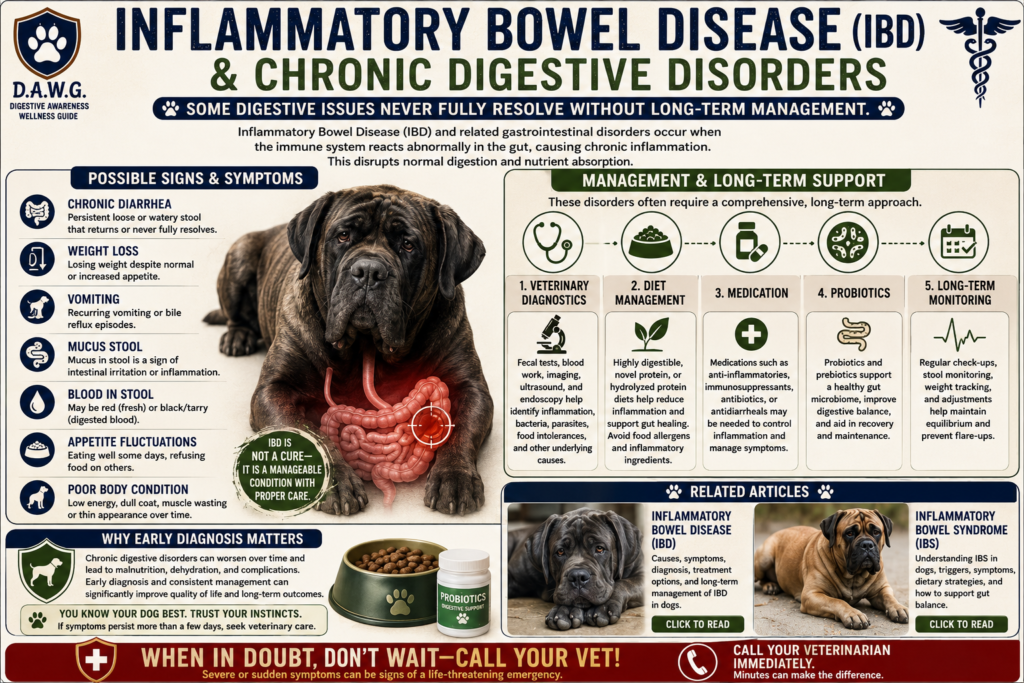
Some digestive issues never fully resolve without long-term management.
Inflammatory Bowel Disease (IBD) and related gastrointestinal disorders may cause:
- Chronic diarrhea
- Weight loss
- Vomiting
- Mucus stool
- Blood in stool
- Appetite fluctuations
- Poor body condition
These disorders often require:
- Veterinary diagnostics
- Diet management
- Medication
- Probiotics
- Long-term monitoring
Related Articles:
Juvenile Digestive & Kidney Concerns
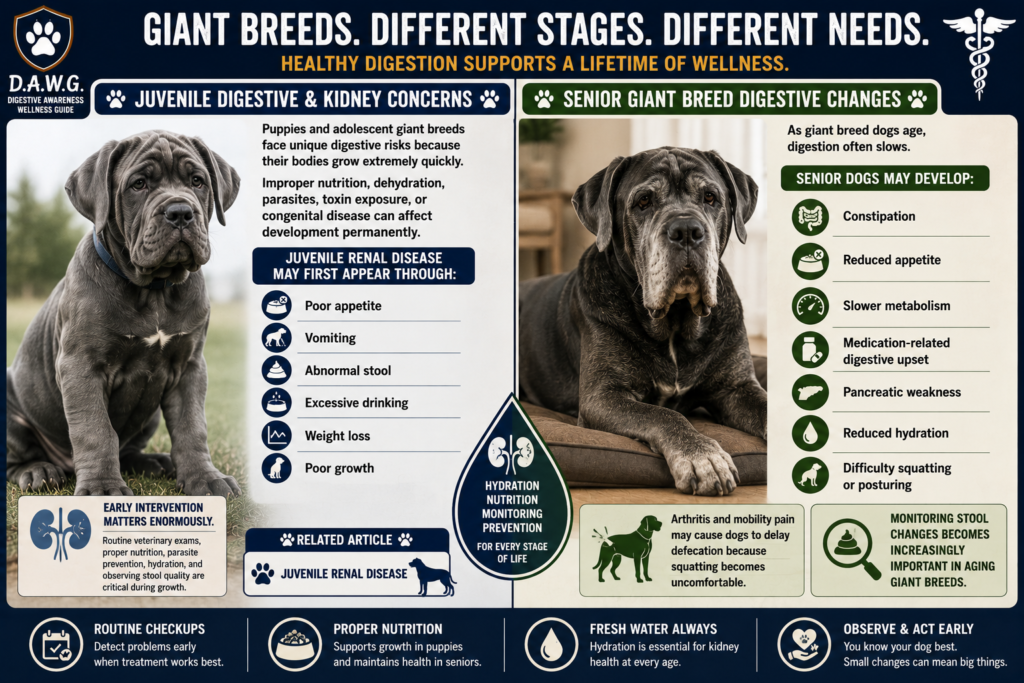
Puppies and adolescent giant breeds face unique digestive risks because their bodies grow extremely quickly.
Improper nutrition, dehydration, parasites, toxin exposure, or congenital disease can affect development permanently.
Juvenile Renal Disease may first appear through:
- Poor appetite
- Vomiting
- Abnormal stool
- Excessive drinking
- Weight loss
- Poor growth
Early intervention matters enormously.
Related Article:
Senior Giant Breed Digestive Changes
As giant breed dogs age, digestion often slows.
Senior dogs may develop:
- Constipation
- Reduced appetite
- Slower metabolism
- Medication-related digestive upset
- Pancreatic weakness
- Reduced hydration
- Difficulty squatting or posturing
Arthritis and mobility pain may even cause dogs to delay defecation because squatting becomes uncomfortable.
Monitoring stool changes becomes increasingly important in aging giant breeds.
Products That Help
Good digestive management begins with daily habits.
Helpful tools may include:
- Slow feeders
- Elevated feeding stations
- Probiotics
- Digestive enzymes
- Stool tracking journals
- Enzyme-based yard cleaners
- Waste disposal systems
- Puzzle feeders
- Fiber supplements
- Pet-safe disinfectants
- Hydration support tools
- Mosquito control products
These tools do not replace veterinary care.
They support healthier routines and better daily observation.
Monitoring: Become a Poop Detective
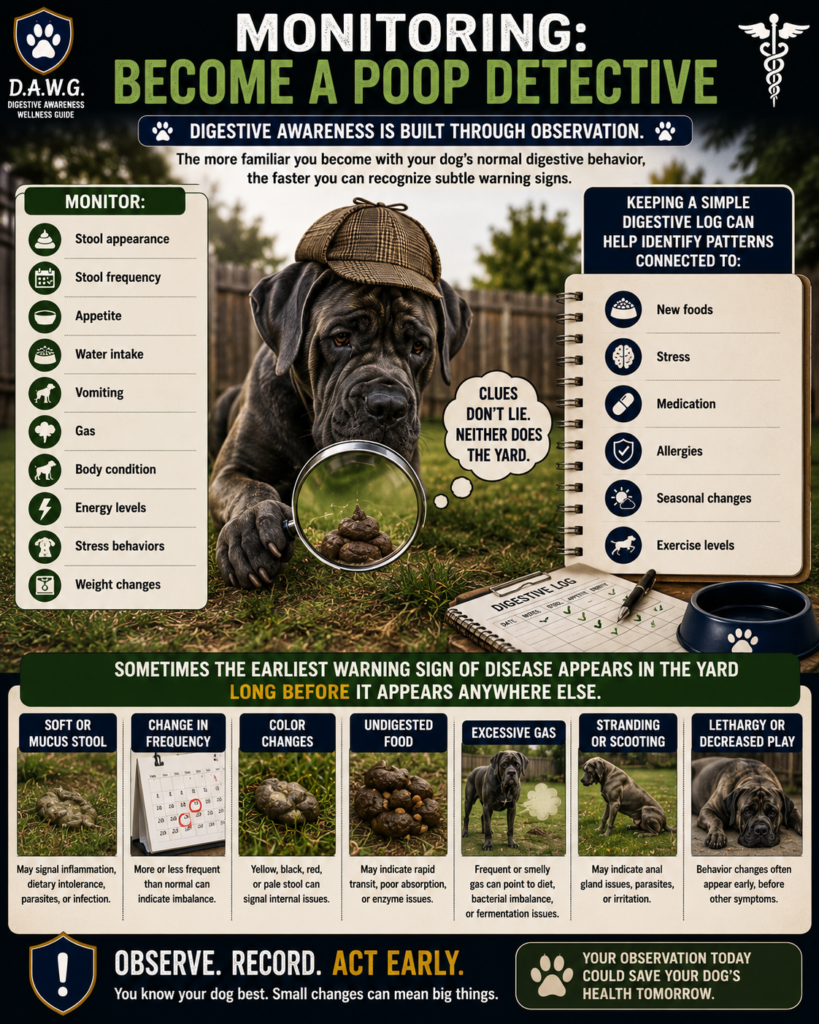
Digestive awareness is built through observation.
The more familiar you become with your dog’s normal digestive behavior, the faster you can recognize subtle warning signs.
Monitor:
- Stool appearance
- Stool frequency
- Appetite
- Water intake
- Vomiting
- Gas
- Body condition
- Energy levels
- Stress behaviors
- Weight changes
Keeping a simple digestive log can help identify patterns connected to:
- New foods
- Stress
- Medication
- Allergies
- Seasonal changes
- Exercise levels
Sometimes the earliest warning sign of disease appears in the yard long before it appears anywhere else.
Related Article: Coming Soon
When Poop Means Emergency
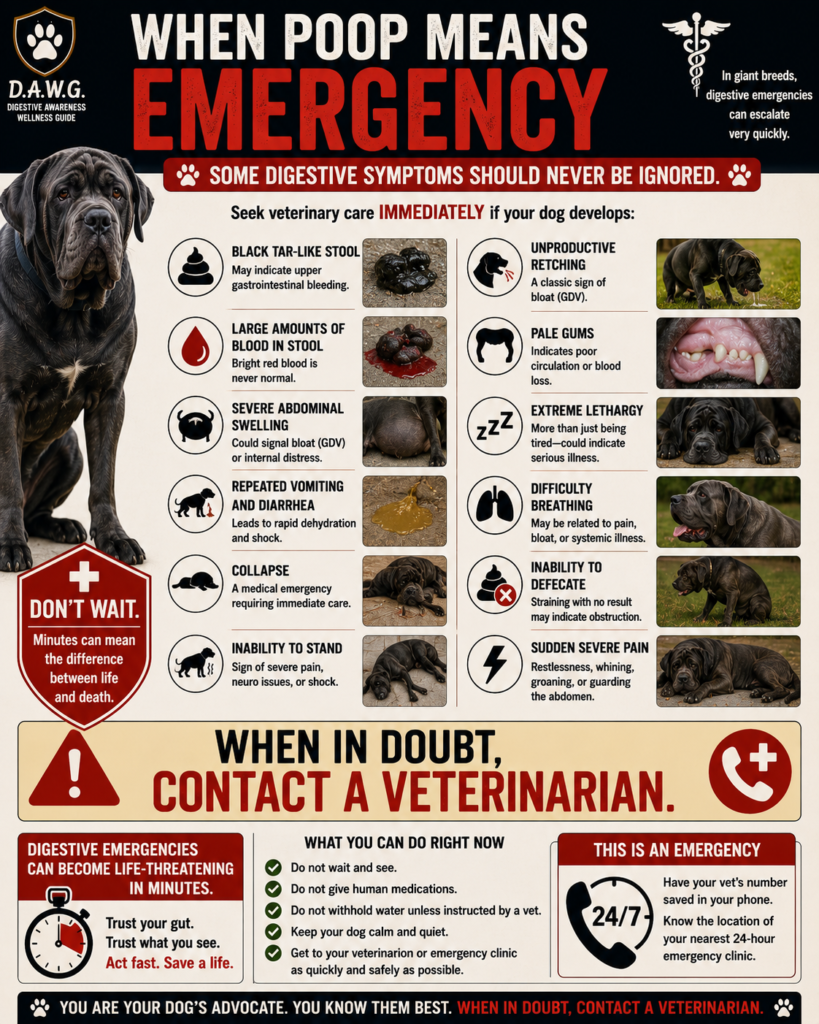
Some digestive symptoms should never be ignored.
Seek veterinary care immediately if your dog develops:
- Black tar-like stool
- Large amounts of blood in stool
- Severe abdominal swelling
- Repeated vomiting and diarrhea
- Collapse
- Inability to stand
- Unproductive retching
- Pale gums
- Extreme lethargy
- Difficulty breathing
- Inability to defecate
- Sudden severe pain
In giant breeds, digestive emergencies can escalate very quickly.
When in doubt, contact a veterinarian.
Emergency Contacts
Every giant breed owner should keep emergency veterinary information accessible at all times.
Important contacts include:
- Primary veterinarian
- 24-hour emergency veterinary hospital
- Animal poison control
- Mobile emergency veterinary services
- Trusted transportation support for giant breeds
ASPCA Animal Poison Control Center Phone: (888) 426-4435
If your dog experiences collapse, breathing difficulty, abdominal swelling, or inability to rise, seek emergency care immediately.
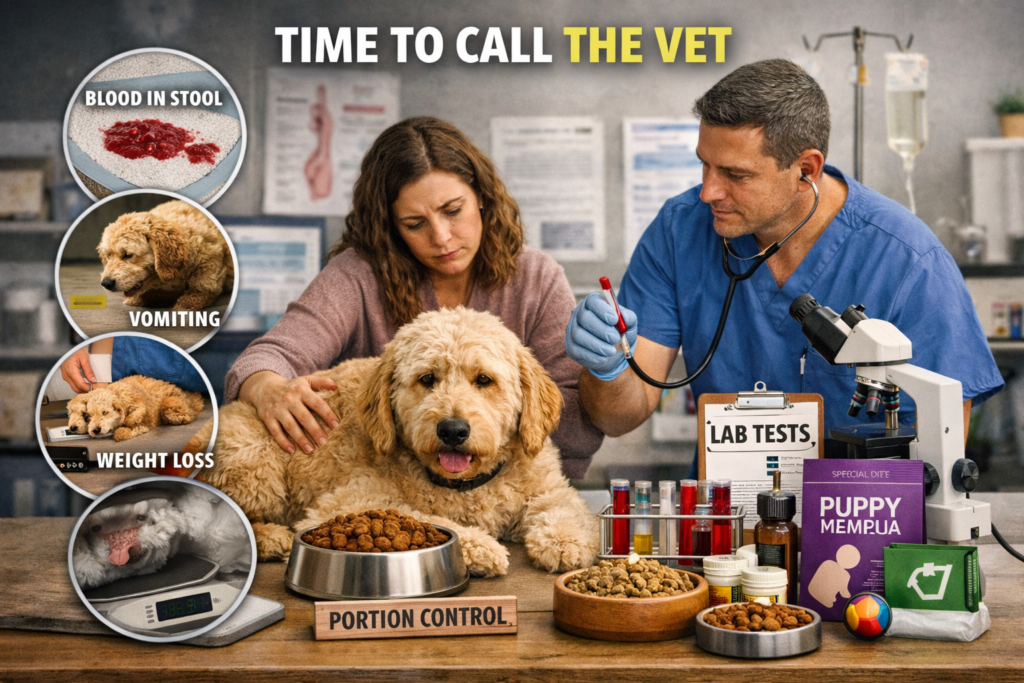
The D.A.W.G. Article Hub
The Digestive Awareness Wellness Guide is designed as a central digestive-health hub connecting owners to deeper educational articles throughout GiantBreeds.net.
Explore Related Articles:
🐶 Obesity
🐶 Toxic Foods
🐶 Waste Tracking
🐶 Juvenile Renal Disease
🐶 Onion Poisoning (Allium Toxicosis)
🐶 Raw Diets & Poop Changes
🐶 Diarrhea
🐶 Inflammatory Bowel Disease (IBD)
🐶 Inflammatory Bowel Syndrome
Each article expands on specific digestive risks, warning signs, prevention strategies, nutritional support, and emergency care considerations for giant breed dogs.
Final Thought: The Scoop on the Poop
At the end of the day, your dog’s stool tells a story.
It reflects what they eat, how they feel, how they handle stress, how well their organ’s function, and sometimes whether a medical crisis is quietly developing.
Digestive awareness is not glamorous.
But it may be one of the most powerful health tools a dog owner has.
When you pay attention to digestion, you are not just cleaning up after your dog.
You are listening. And sometimes, that simple act of observation can change — or even save — a life.
