Toxic Foods for Giant Breed Dogs: The Dangerous Foods Hiding in Plain Sight
Most people think of poison as something obvious — a skull-and-crossbones bottle under the sink or a dangerous chemical locked away in a garage. But for dogs, especially giant breed dogs, some of the most dangerous toxins are sitting openly in kitchens, lunch boxes, gardens, and holiday dinners.
Toxic food poisoning happens when a dog eats something their body cannot safely process. Unlike humans, dogs metabolize certain foods very differently. Ingredients that seem harmless to us can damage a dog’s organs, nervous system, digestive tract, or cardiovascular system within hours.
For giant breed dogs, the danger can sometimes be deceptive. Owners may assume a larger dog can “handle more” because of their size. In reality, giant breeds often experience serious complications because their bodies already operate under increased strain from rapid growth, large organ demand, and slower aging processes.
Within the GiantBreeds.net D.A.W.G. system, toxic food exposure is also deeply connected to digestive monitoring. Vomiting, diarrhea, stool color changes, unusual odor, or sudden bowel irregularities are often some of the earliest warning signs that a dog has consumed something dangerous.
Sometimes the evidence of poisoning first appears not in the mouth — but in the yard.
Symptoms
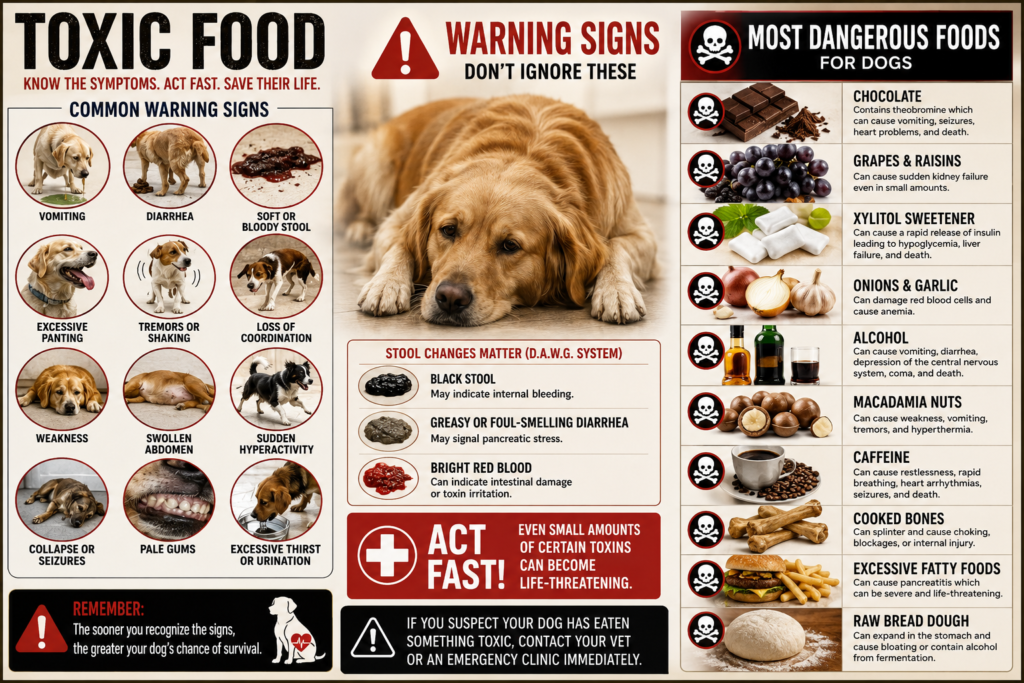
Symptoms of toxic food poisoning can appear within minutes or may take several hours depending on the substance involved. Some toxins attack the digestive system first, while others damage the liver, kidneys, heart, or nervous system.
The earliest signs are often mistaken for simple stomach upset. Your dog may drool excessively, vomit, pace around the house, or suddenly seem restless and uncomfortable. As poisoning progresses, symptoms may become far more serious.
Common warning signs include:
- Vomiting
- Diarrhea
- Soft or bloody stool
- Excessive panting
- Tremors or shaking
- Loss of coordination
- Weakness
- Swollen abdomen
- Sudden hyperactivity
- Collapse or seizures
- Pale gums
- Excessive thirst or urination
Within the D.A.W.G. system, stool changes become especially important. Black stool may indicate internal bleeding. Greasy or foul-smelling diarrhea may signal pancreatic stress. Bright red blood can indicate intestinal damage or toxin irritation.
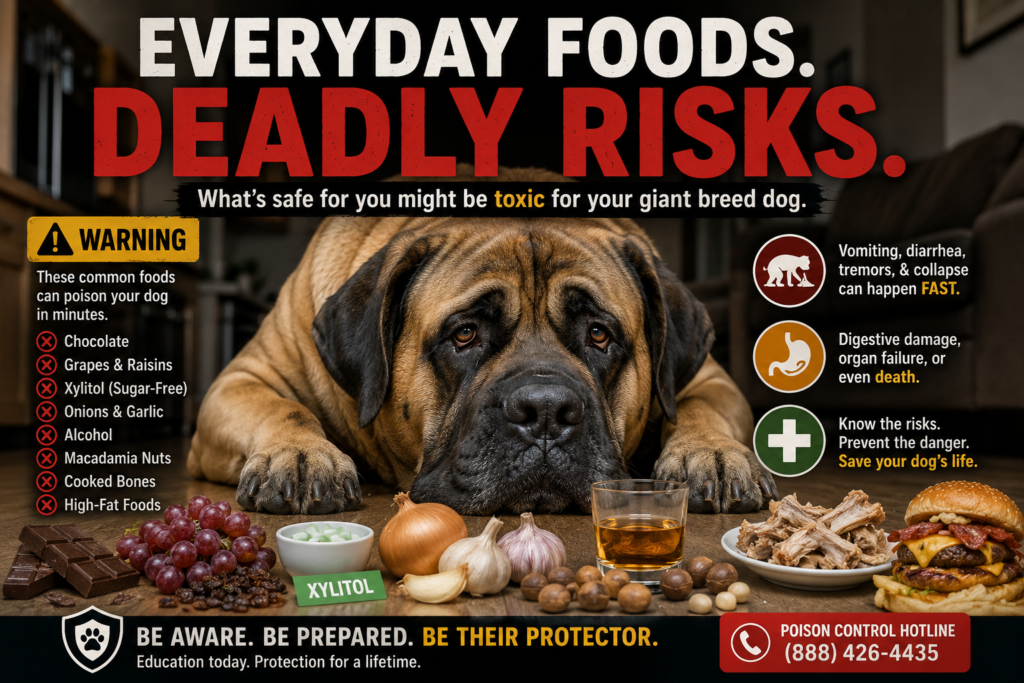
Some of the most dangerous foods for dogs include:
- Chocolate
- Grapes and raisins
- Xylitol sweetener
- Onions and garlic
- Alcohol
- Macadamia nuts
- Caffeine
- Cooked bones
- Excessive fatty foods
- Raw bread dough
Even small amounts of certain toxins can become life-threatening.
Prevention
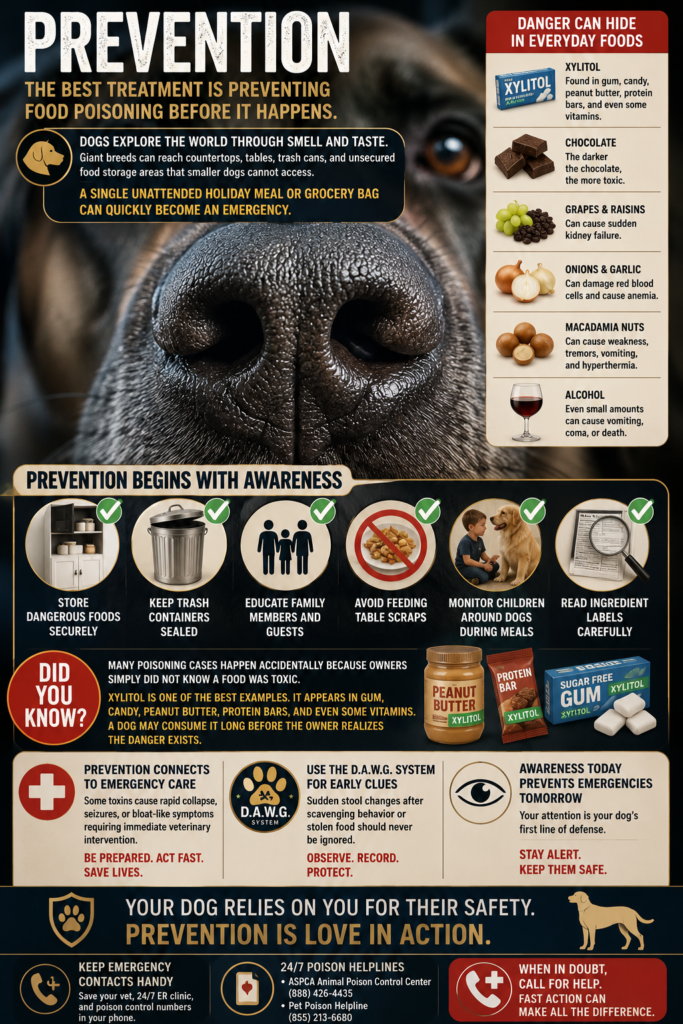
The best treatment for food poisoning is preventing it before it happens.
Dogs explore the world through smell and taste. Giant breeds are especially capable of reaching countertops, tables, trash cans, and unsecured food storage areas that smaller dogs cannot access. A single unattended holiday meal or grocery bag can quickly become an emergency.
Prevention begins with awareness:
- Store dangerous foods securely
- Keep trash containers sealed
- Educate family members and guests
- Avoid feeding table scraps
- Monitor children around dogs during meals
- Read ingredient labels carefully
Many poisoning cases happen accidentally because owners simply did not know a food was toxic. Xylitol is one of the best examples. It appears in gum, candy, peanut butter, protein bars, and even some vitamins. A dog may consume it long before the owner realizes the danger exists.
Prevention also connects directly to the Emergency Care section of GiantBreeds.net. Some toxins cause rapid collapse, seizures, or bloat-like symptoms requiring immediate veterinary intervention.
Routine observation through the D.A.W.G. system can also provide early clues. Sudden stool changes after scavenging behavior or stolen food should never be ignored.
Nutritional Considerations
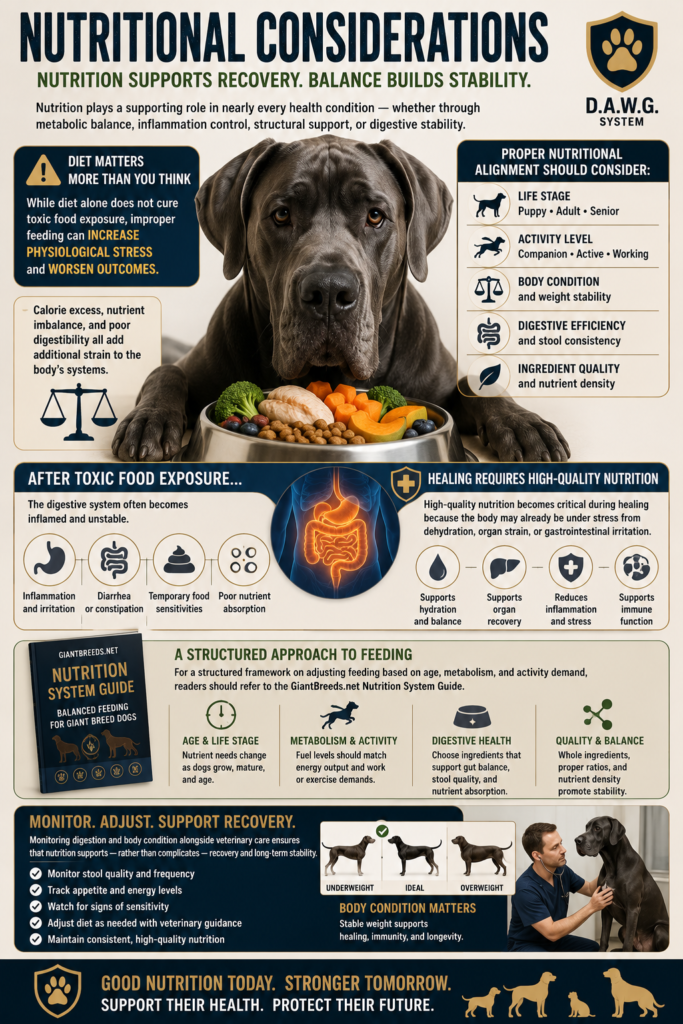
Image 4 What you eat can kill you
Nutrition plays a supporting role in nearly every health condition — whether through metabolic balance, inflammation control, structural support, or digestive stability.
While diet alone does not cure toxic food exposure, improper feeding can increase physiological stress and worsen outcomes. Calorie excess, nutrient imbalance, and poor digestibility all add additional strain to the body’s systems.
Proper nutritional alignment should consider:
- Life stage (Puppy, Adult, Senior)
- Activity level (Companion, Active, Working)
- Body condition and weight stability
- Digestive efficiency and stool consistency
- Ingredient quality and nutrient density
After toxic food exposure, the digestive system often becomes inflamed and unstable. Some dogs develop temporary food sensitivities, diarrhea, constipation, or poor nutrient absorption during recovery.
High-quality nutrition becomes critical during healing because the body may already be under stress from dehydration, organ strain, or gastrointestinal irritation.
For a structured framework on adjusting feeding based on age, metabolism, and activity demand, readers should refer to the GiantBreeds.net Nutrition System Guide.
Monitoring digestion and body condition alongside veterinary care ensures that nutrition supports — rather than complicates — recovery and long-term stability.
Products to Help
Managing toxic food risks often comes down to preparation and environmental control.
Helpful products may include:
- Locking food storage containers
- Heavy-duty trash cans with secure lids
- Elevated feeding stations
- Slow-feeder bowls
- Pet-safe digestive probiotics
- Emergency first-aid kits
- Activated charcoal products approved by veterinarians
- Travel water bowls
- Pet monitoring cameras
Large dogs are skilled opportunists. Prevention products are not about paranoia — they are about reducing temptation before curiosity becomes disaster.
Digestive-support products may also help stabilize stool consistency during recovery after mild gastrointestinal irritation.
Action — Call the Vet
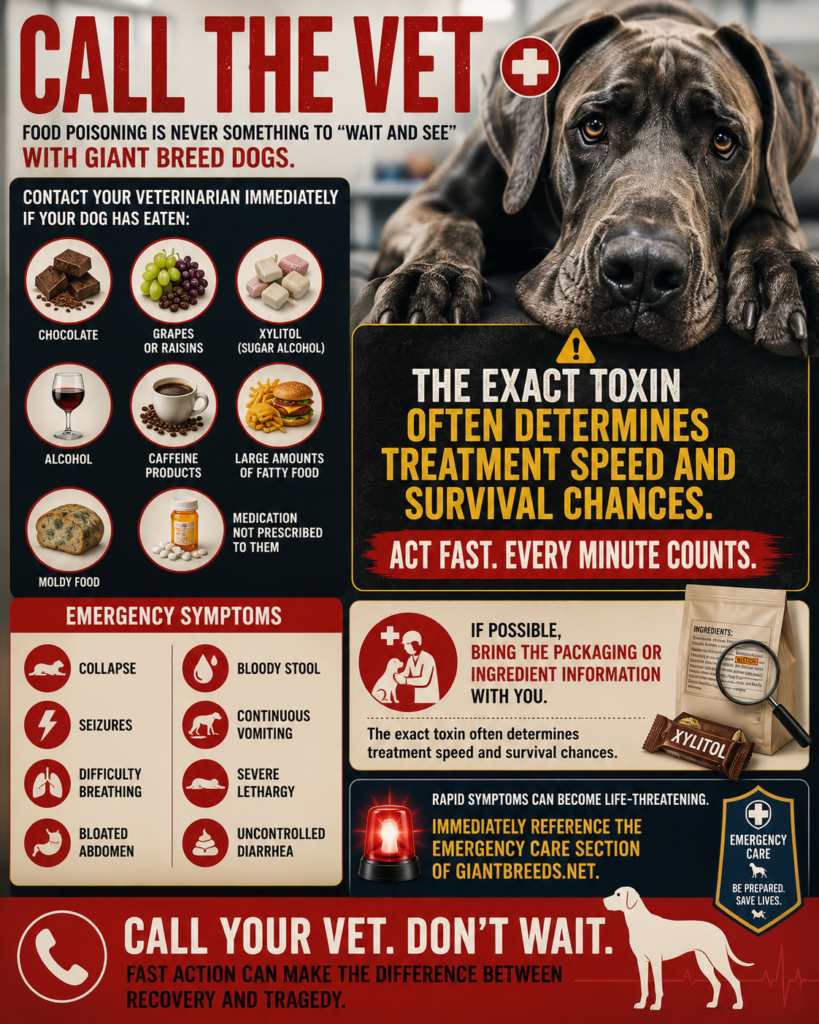
Food poisoning is never something to “wait and see” with giant breed dogs.
Contact your veterinarian immediately if your dog has eaten:
- Chocolate
- Grapes or raisins
- Xylitol
- Alcohol
- Caffeine products
- Large amounts of fatty food
- Moldy food
- Medication not prescribed to them
Emergency symptoms include:
- Collapse
- Seizures
- Difficulty breathing
- Bloated abdomen
- Bloody stool
- Continuous vomiting
- Severe lethargy
- Uncontrolled diarrhea
If possible, bring the packaging or ingredient information with you. The exact toxin often determines treatment speed and survival chances.
Readers should also immediately reference the Emergency Care section of GiantBreeds.net when rapid symptoms appear.
Veterinary Treatment
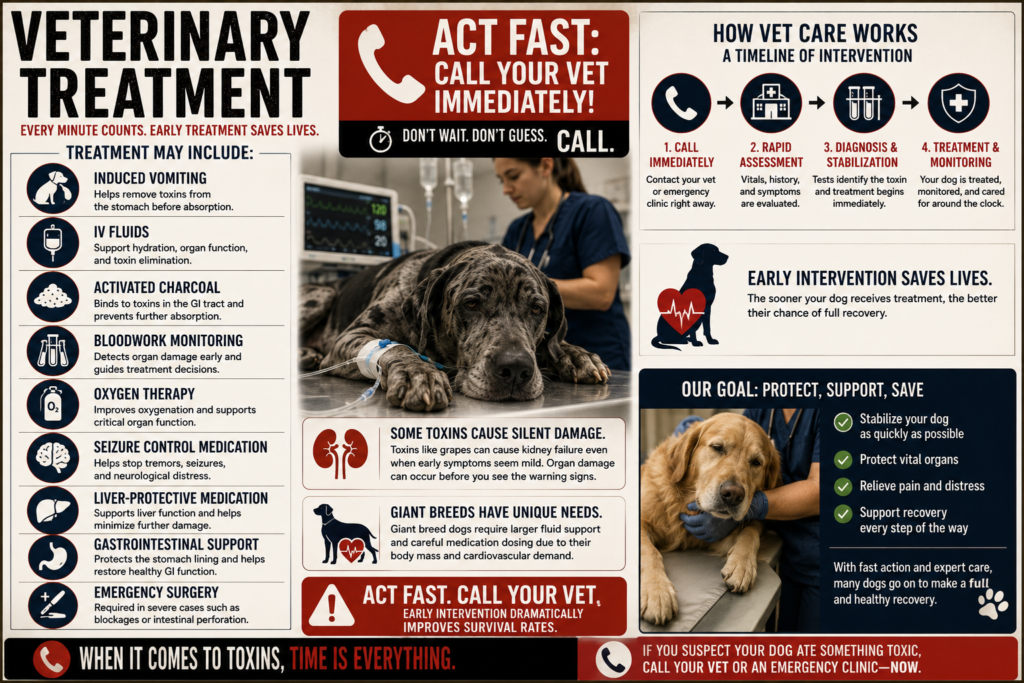
Veterinary treatment depends entirely on the toxin involved and how quickly the exposure is identified.
Treatment may include:
- Induced vomiting
- IV fluids
- Activated charcoal
- Bloodwork monitoring
- Oxygen therapy
- Seizure control medication
- Liver-protective medication
- Gastrointestinal support
- Emergency surgery in severe cases
Some toxins damage organs silently before outward symptoms appear. Grapes, for example, may trigger kidney failure even when early symptoms seem mild.
Giant breed dogs often require larger fluid support and careful medication dosing because of their body mass and cardiovascular demand.
Early intervention dramatically improves survival rates.
Home Remedies
Home remedies should never replace veterinary care for known toxic food exposure.
However, after veterinary guidance, supportive care at home may include:
- Bland diets such as boiled chicken and rice
- Careful hydration monitoring
- Rest and reduced physical stress
- Dog-safe probiotics
- Small frequent meals during recovery
Owners should never induce vomiting unless instructed by a veterinarian. Certain toxins cause additional damage when vomited back through the esophagus.
Internet advice can also be dangerous. Not every “safe” remedy online is actually safe for giant breed dogs. Talk to your Vet!
Risk Factors
Some dogs face greater risk simply because of their environment and behavior.
Common risk factors include:
- Counter surfing
- Free roaming kitchens
- Unsecured garbage
- Holiday gatherings
- Children dropping food
- Outdoor scavenging
- Multi-pet competition
- Boredom
- Anxiety-related chewing
Large dogs can access areas smaller dogs cannot reach. Giant breeds may also consume dangerous amounts before owners even notice food is missing.
Within the D.A.W.G. system, unusual stool changes after scavenging should always be treated seriously.
Genetic and Breed Considerations
Not all breeds react identically to toxins.
Some giant breeds already have increased vulnerability to digestive stress, heart strain, or bloat complications, making toxic exposure even more dangerous.
Breeds such as:
- Great Dane
- Mastiff
- Newfoundland
- Saint Bernard
may experience more severe complications from fatty foods, digestive swelling, or dehydration.
Some herding breeds also possess MDR1 genetic mutations that affect medication processing during emergency treatment.
Breed size does not provide protection from poisoning. In many cases, it simply changes how rapidly complications appear.
Psychological Factors
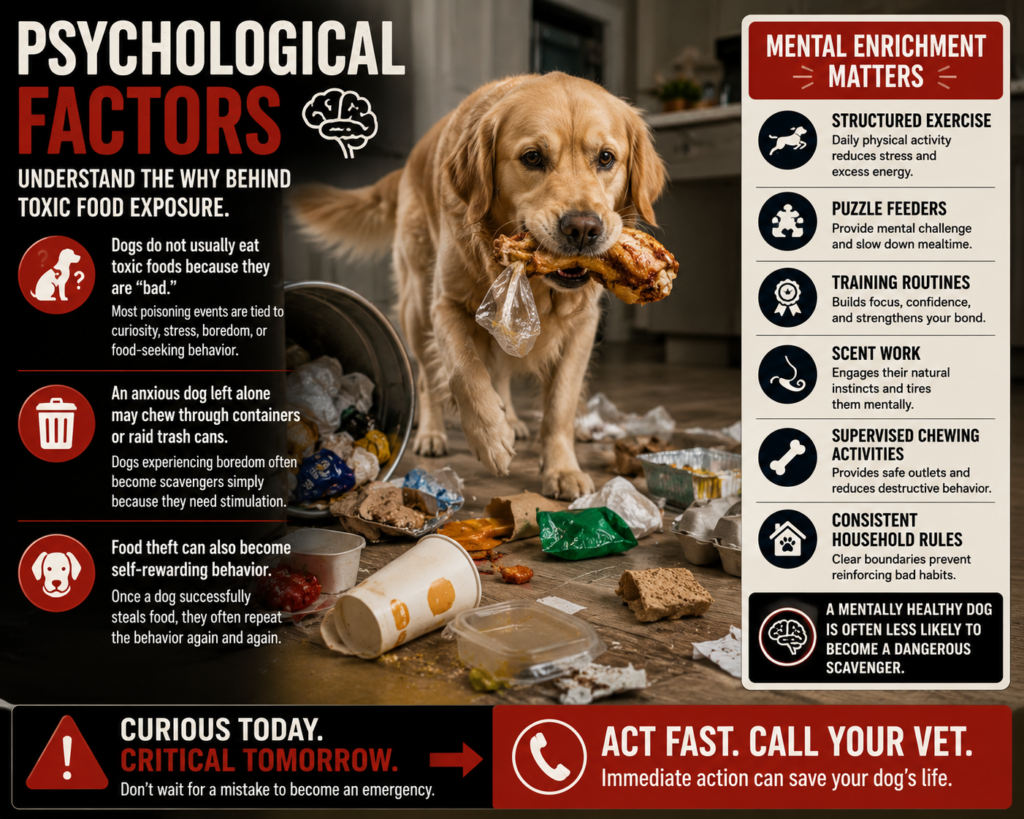
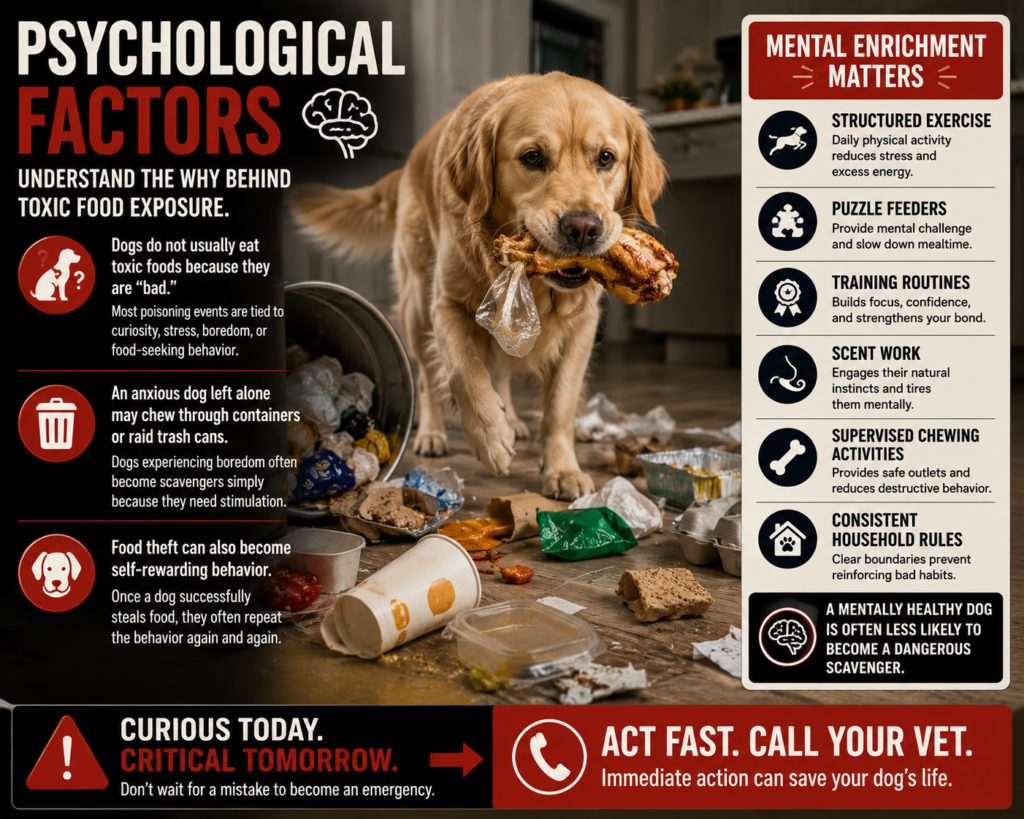
Dogs do not usually eat toxic foods because they are “bad.” Most poisoning events are tied to curiosity, stress, boredom, or food-seeking behavior.
An anxious dog left alone may chew through containers or raid trash cans. Dogs experiencing boredom often become scavengers simply because they need stimulation.
Food theft can also become self-rewarding behavior. Once a dog successfully steals food, they often repeat the behavior again and again.
Mental enrichment matters:
- Structured exercise
- Puzzle feeders
- Training routines
- Scent work
- Supervised chewing activities
- Consistent household rules
A mentally healthy dog is often less likely to become a dangerous scavenger.
Surgical Options
Surgery is not common for most toxic food exposures, but severe cases sometimes require emergency intervention.
Surgery may become necessary if:
- Cooked bones create obstruction
- Foreign packaging is swallowed
- Intestinal perforation occurs
- Bloat develops after overeating
- Toxic material becomes trapped in the digestive tract
Giant breed dogs already face elevated surgical risk because of anesthesia complications and cardiovascular strain.
Preventing ingestion remains far safer than treating complications later.
Abdominal explore in a dog with intestinal foreign body.
See also the article on bloat.
Monitoring
Monitoring after suspected toxic exposure becomes critical during the first 24 to 72 hours.
Owners should observe:
- Stool color and consistency
- Vomiting frequency
- Water intake
- Energy level
- Coordination
- Breathing changes
- Gum color
- Appetite
- Abdominal swelling
Within the D.A.W.G. system, stool monitoring may reveal worsening internal damage before other symptoms appear. Black stool, mucus-covered diarrhea, or sudden foul odor changes should never be dismissed after toxin exposure.
Keeping notes, photographs, or timestamps can also help veterinarians evaluate progression more accurately.
Emergency Contacts
Every giant breed owner should have emergency numbers accessible before disaster happens.
Important contacts include:
- Primary veterinarian
- 24-hour emergency veterinary hospital
- Animal poison control
- Mobile emergency transport services
🚨 EMERGENCY PREPAREDNESS TIP

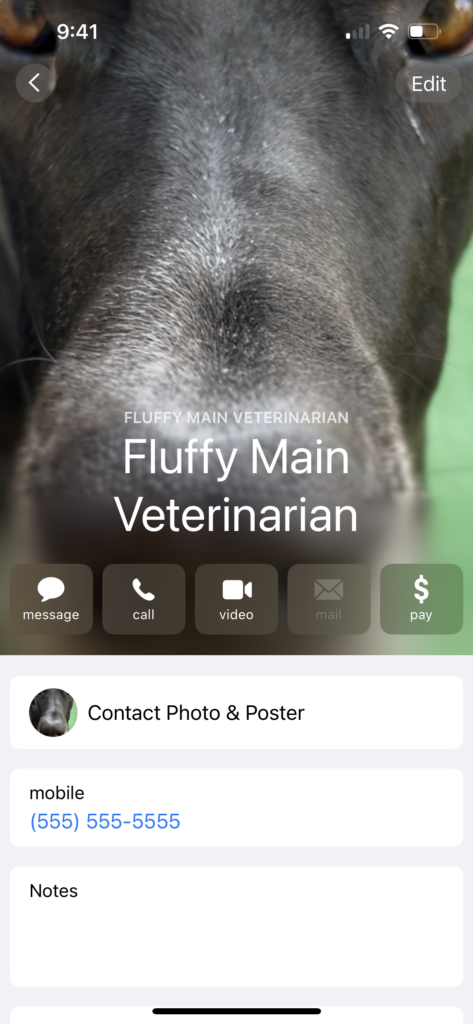
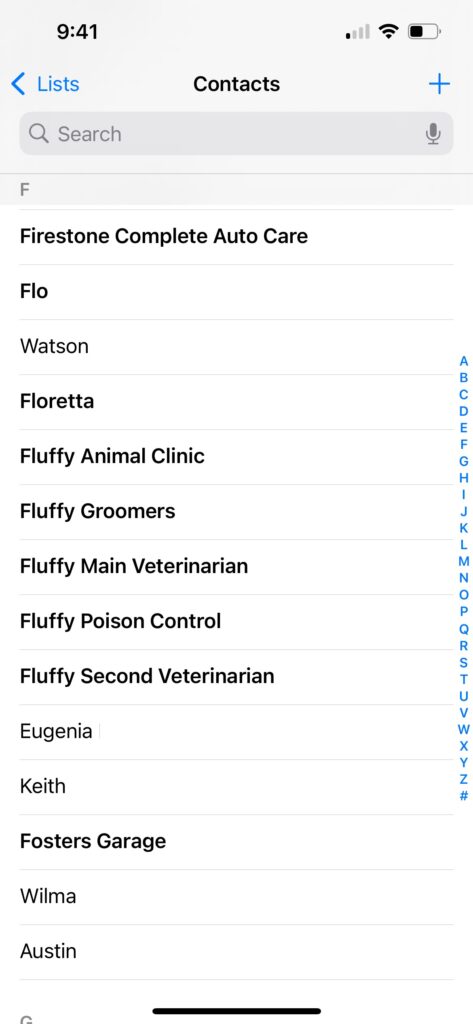
Build a Contact Card for Your Dog
When an emergency happens, every second matters. The last thing you want is to scroll through dozens of contacts trying to remember which veterinary clinic is open, where Poison Control’s number is stored, or how to reach your emergency veterinarian.
A simple solution is to create a contact in your phone using your dog’s name and store every important emergency number under that single entry.
For example:
“Rex – Emergency Contacts”
Under that contact, save:
Essential Numbers
• Primary veterinarian
• Nearest 24/7 emergency veterinary hospital
• ASPCA Animal Poison Control Center
• Pet Poison Helpline
• Local Animal Control or Humane Society
Helpful Backup Contacts
• Trusted pet sitter or dog walker
• Reliable friend, neighbor, or family member
• Microchip registry support line
• Pet insurance emergency claims number
• Local 24-hour pharmacy
Many smartphones allow multiple phone numbers under a single contact. By storing them together, searching for your dog’s name immediately displays every emergency resource you may need.
You can also save your dog’s:
• Microchip number
• Date of birth
• Current medications
• Known allergies
• Veterinary account number
Think of it as a digital emergency folder that travels with you everywhere.
When stress is high and decisions must be made quickly, having everything in one place can save valuable time—and potentially save your dog’s life.
ASPCA Animal Poison Control Center
Phone: (888) 426-4435
Fast action often makes the difference between recovery and tragedy. Link to emergency contact sheet
Final Thought: Danger Often Looks Ordinary
Most toxic foods do not look dangerous. They look like snacks, leftovers, treats, or forgotten kitchen scraps.
That is what makes them so deadly.
For giant breed dogs, a single careless moment can quickly become an emergency measured in minutes instead of hours. And often the first signs appear quietly — a strange stool in the yard, sudden vomiting, unusual panting, or a dog that suddenly “just seems off.”
The D.A.W.G. system exists because those early signs matter.
Sometimes the body whispers before it screams.
And sometimes the warning is waiting in the grass before the emergency fully arrives.